

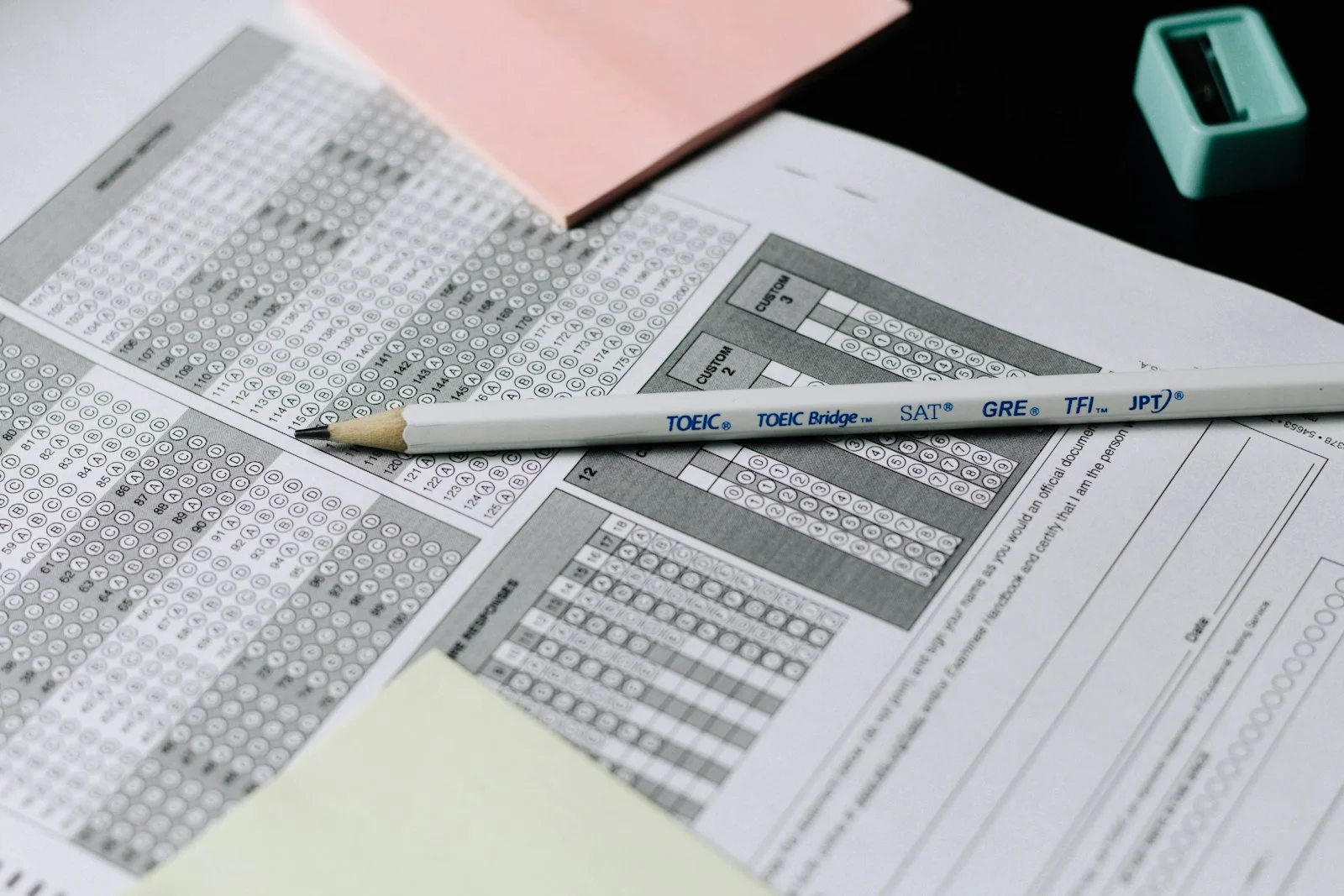

The EJU exam (Examination for Japanese University Admission for International Students) is the test many Japanese universities use to judge international applicants’ Japanese and academic skills. In 2027 it will be held on Sunday 20 June and Sunday 14 November, and applications for the June sitting open from 15 February to 11 March 2027.
The Japan Student Services Organization (JASSO) has published its guidelines for the 2027 EJU, and fees rise at most test centres. Here is what to know about dates, subjects, scores, costs and how to apply.
What Is the EJU Exam?
JASSO runs the EJU with the cooperation of Japan’s education and foreign ministries. It tests Japanese language and basic academic ability for international students who want to study at undergraduate level in Japan.
There is no pass or fail. Each university decides whether to use the EJU in its admissions and which subjects it wants, JASSO explains. As of November 2026, 956 schools used EJU scores, including 510 universities, 88 junior colleges, 83 graduate schools, 51 colleges of technology and 216 professional training colleges.
EJU 2027 Exam Dates
| Session | Application period | Exam date | Score release (tentative) |
|---|---|---|---|
| 1st session | Mon 15 Feb – Thu 11 Mar 2027 | Sun 20 Jun 2027 | Tue 27 Jul 2027 |
| 2nd session | Mon 12 Jul – Thu 5 Aug 2027 | Sun 14 Nov 2027 | Tue 21 Dec 2027 |
In Japan, applications close at 5pm Japan time on the last day, and exam vouchers are due to be posted on 21 May and 22 October 2027. Outside Japan, voucher dates are set by the local representative in each country.
EJU Subjects and Scoring
| Subject | Time | Score range | Notes |
|---|---|---|---|
| Japanese as a Foreign Language | 125 min | 0–400 (reading, listening, listening-reading); writing 0–50 | Japanese only; includes a writing task |
| Science | 80 min | 0–200 | Choose two of physics, chemistry and biology |
| Japan and the World | 80 min | 0–200 | Liberal arts, testing thinking and logic |
| Mathematics | 80 min | 0–200 | Course 1 or Course 2 |
- You cannot take Science and Japan and the World in the same session.
- Apart from the Japanese test, you can answer in Japanese or English.
- Questions are multiple choice, except the Japanese writing section.
- Mathematics Course 1 suits liberal arts and less maths-heavy science programmes; Course 2 is for programmes needing advanced maths.
Scores are scaled so results from different sessions can be compared, and they are valid for two years. If you sit the EJU more than once, you can submit your best result from the sessions your chosen university accepts.
EJU Fees in 2027
| Test location | 2026 fee | 2027 fee |
|---|---|---|
| Japan | JPY 12,000 (1 subject) / JPY 23,000 (2–3) | JPY 13,000 (1 subject) / JPY 25,000 (2–3) |
| Hong Kong | HKD 600 / HKD 1,150 | HKD 700 / HKD 1,300 |
| South Korea | KRW 65,000 / KRW 110,000 | KRW 75,000 / KRW 140,000 |
| Taiwan | TWD 1,500 / TWD 2,000 | TWD 1,800 / TWD 3,500 |
| Indonesia | IDR 110,000 | IDR 210,000 |
| Malaysia | MYR 90 | MYR 120 |
| Philippines | PHP 750 | PHP 1,320 |
| Singapore | SGD 65 | SGD 110 |
| Thailand | THB 400 | THB 600 |
| Vietnam | VND 275,000 | VND 430,000 |
| India | INR 1,300 | INR 1,300 |
Mongolia (MNT 100,000), Myanmar (US$20) and Sri Lanka (LKR 4,800) also have 2027 fees listed. Postage for exam vouchers is charged separately and will be announced in the EJU Bulletin.
Where Can You Take the EJU?
In Japan, the exam runs in 17 areas from Hokkaido to Okinawa. Outside Japan, the 2027 venues are Hong Kong, New Delhi, Jakarta, Surabaya, Kuala Lumpur, Ulaanbaatar, Yangon, Manila, Seoul, Busan, Singapore, Colombo, Taipei, Bangkok, Chiang Mai, Hanoi and Ho Chi Minh City.
For the November 2026 sitting, JASSO counted 32,853 applicants: 24,509 in Japan and 8,344 abroad. Seoul (3,800) and Hong Kong (2,135) were the largest overseas centres, while Jakarta had 251 and Kuala Lumpur 151.
How to Apply for the EJU
- Check each university’s rules. Confirm whether it uses the EJU, which subjects and maths course it wants, the answer language and which sessions it accepts.
- Choose your subjects. You can take up to three, for example Japanese, Mathematics and either Science or Japan and the World.
- Apply within the window. In Japan, apply through EJU Online. Outside Japan, apply through your country’s overseas representative, such as JAGAM in Malaysia.
- Get your exam voucher and check your venue and start time.
- Sit the exam and check your scores on the release date. Universities registered with JASSO can look up scores directly.
Full application steps will be published in the 2027 EJU Bulletin. If you are also preparing for language or scholarship requirements, see our guides to the MEXT Scholarship and the JLPT, or compare the EJU with Asia’s other big exams: China’s gaokao, Korea’s Suneung and the TOPIK levels.
FAQ
Is the EJU mandatory to study in Japan?
No. Each university decides whether to use the EJU, and some do not use it at all, so check your target schools before you register.
How much does the EJU cost in 2027?
In Japan, JPY 13,000 for one subject or JPY 25,000 for two or three. Overseas fees vary, for example MYR 120 in Malaysia, SGD 110 in Singapore and THB 600 in Thailand.
How hard is the EJU?
There is no pass mark. Scores are scaled and each university sets its own expectations, so the score you need depends on the programme. The Japanese test covers academic-level Japanese, including a writing task.
How long are EJU scores valid?
Two years. You can submit your highest score from the sessions your university says it will consider.
Can I take the EJU outside Japan?
Yes. In 2027 it is offered in 17 cities outside Japan, including Kuala Lumpur, Jakarta, Bangkok, Manila, Singapore, Hanoi and Ho Chi Minh City.
With the 2027 dates fixed, the practical next step is to confirm your target universities’ subject lists before the February application window opens.