

Singapore is called the Lion City because its name comes from Singapura, from the Sanskrit words simha (lion) and pura (city). According to the Malay Annals, a prince from Palembang named Sang Nila Utama gave the island that name after seeing an animal he believed was a lion.
There have never been wild lions in Singapore, which is why people still ask why Singapore is called the Lion City. Here is where the name came from, what the prince may really have seen and how the lion became the country’s best-known symbol.
What does Singapura mean?
Singapura joins two Sanskrit words: simha, meaning lion, and pura, meaning city or town. In Malay, singa still means lion. The English name Singapore comes straight from Singapura.
In fact, lion names were not unusual in the region. A 2026 article in the National Library Board’s BiblioAsia journal notes that the lion stood for prestige and royal power across Southeast Asia, which is why places such as Singburi in Thailand and the old Simhapura in Vietnam carry the same root, even though lions never lived there.
Why Singapore is called the Lion City: the legend of Sang Nila Utama
The best-known version of the story comes from the Sejarah Melayu, or Malay Annals, a court history written centuries after the events it describes. It goes roughly like this:
- Sang Nila Utama, a Srivijayan prince from Palembang in Sumatra, sets sail, and a violent storm hits his ship.
- To keep the ship afloat, his crew throws cargo overboard. The storm only calms when the prince throws his crown into the sea.
- He lands on the island then known as Temasek.
- He spots a fast-moving animal with a red body, a black head and a white chest.
- When his men tell him it is a lion, he takes it as a good sign, settles there and renames the island Singapura.
Many accounts date the founding to 1299, but the Annals mix history with legend, and historians treat the exact details with caution. According to Roots.sg, the prince saw the animal near the mouth of the Singapore River.
Lion or tiger?
Lions are not native to Southeast Asia, so the animal in the story was almost certainly not a lion. Instead, many writers suggest it was a Malayan tiger, which once roamed the island. Meanwhile, others see the “lion” as a symbol rather than a real sighting: a royal sign that gave a new city prestige.
Either way, the name stuck. Singapore’s lion grew from a legend into an emblem, and later into the official symbols the country uses today.
Singapore’s names through history
| Name | Language or period | Meaning or note |
|---|---|---|
| Pulau Ujong | Malay, early name | “Island at the end”, likely for its spot at the tip of the peninsula |
| Temasek | 14th century | Often linked to the Malay word for sea; recorded in Javanese and Chinese sources |
| Singapura | Malay, from Sanskrit | “Lion City” |
| Singapore | English, from 1819 | The British form of Singapura |
| Syonan-to | Japanese occupation, 1942–1945 | “Light of the South Island” |
| Xinjiapo (新加坡) | Mandarin | A sound-based rendering of Singapore |
| Singappur | Tamil | Tamil form of the same name |
The name Temasek lives on today, most visibly in the name of the state investment company Temasek Holdings.
How the lion lives on: the Merlion
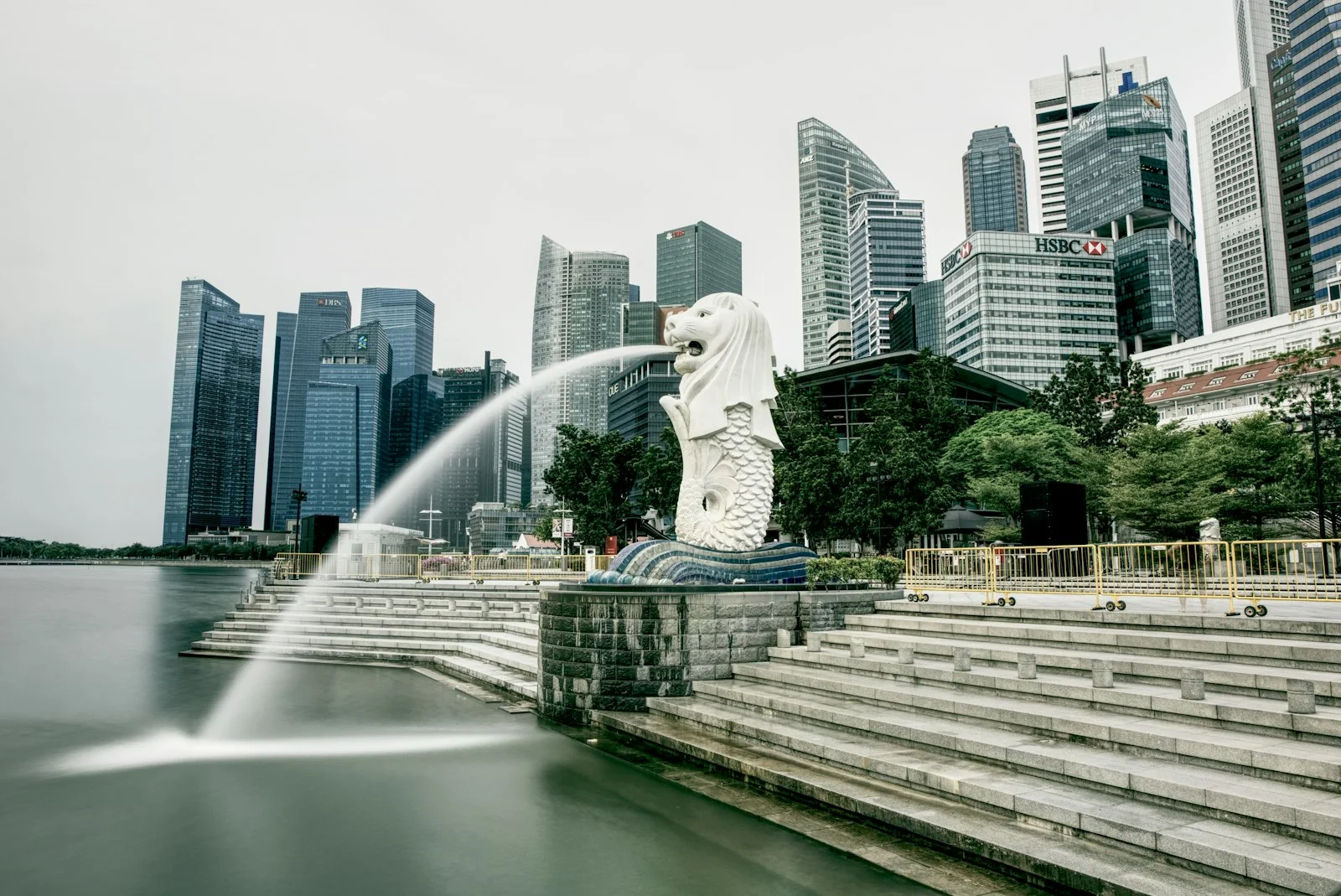
The Merlion, with the head of a lion and the body of a fish, is Singapore’s most photographed icon. The Singapore Tourist Promotion Board first created it in 1964 as its logo, according to Roots.sg, and registered it as a trademark on 20 July 1966, the NLB’s Infopedia records.
The two halves tell the story of the city’s names. The fish body recalls Temasek’s beginnings as a fishing village, while the lion head points back to Singapura. Local sculptor Lim Nang Seng completed the statue in 1972 near the mouth of the Singapore River, close to where Sang Nila Utama is said to have seen his lion. In 2002, the statue moved to its current spot at Merlion Park.
The Lion Head symbol
Singapore also has a separate national lion symbol. The government introduced the Lion Head in 1986 as an alternative national symbol that people and organisations could use to show their link to the country. The design came from a young designer, Michael Lee.
The National Heritage Board says the lion represents courage, strength and excellence. Its official colours are red, white or black, and companies may not use the symbol in their trademarks.
FAQ
Who named Singapore the Lion City?
According to the Malay Annals, Sang Nila Utama, a prince from Palembang, renamed the island Singapura after seeing what he believed was a lion.
What is the old name of Singapore?
Before it became Singapura, the island was known as Temasek. An earlier name, Pulau Ujong, also appears in historical accounts.
Were there ever lions in Singapore?
No. Lions have never lived wild in Singapore or Southeast Asia. Many believe the animal in the legend was a Malayan tiger.
What does China call Singapore?
In Mandarin, Singapore is Xinjiapo (新加坡), a rendering based on the sound of the name rather than its meaning.
What is the difference between the Merlion and the Lion Head symbol?
The Merlion is a half-lion, half-fish tourism icon created in 1964. The Lion Head is a national symbol introduced in 1986 for wider public use.
Curious about other Asian names and customs? Read why Japan is called the Land of the Rising Sun, why 8 is a lucky number in Chinese culture and why many buildings in Asia have no 4th floor. Visiting soon? Check Singapore public holidays in 2027 and learn what a Singapore car plate tells you.