



Women entrepreneurs in Indonesia run many of the country’s smallest businesses, from food stalls and tailoring shops to home-based crafts. Two kinds of support are helping them grow: large-scale group financing with mentoring, and newer pilot programmes that pair training with funding. This guide explains how they work, using the latest published figures.
Why Support for Women Entrepreneurs in Indonesia Matters
Ultra-micro businesses are the first step on the business ladder. Their owners often lack collateral, a credit history or business training, which makes bank loans hard to get. Many also balance their business with caring for family, so flexible support close to home makes a real difference. Programmes that close these gaps can lift household income and, over time, create jobs in local communities.
Women also run most of Indonesia’s micro, small and medium enterprises (MSMEs). In July 2024, Coordinating Minister for Economic Affairs Airlangga Hartarto said women made up 64.5% of MSME operators. That is about 37 million people, according to a ministry press release. In October 2026, the Ministry of MSMEs (Kementerian UMKM) estimated there were 56.1 million to 59.2 million MSMEs, including agriculture.
However, finance remains a major hurdle for women entrepreneurs in Indonesia. In 2023, the International Finance Corporation (IFC) put the country’s MSME financing gap at US$21.2 billion. It said the gap is widest among female microentrepreneurs. For the regional picture, see how SMEs are driving ASEAN’s next decade.
PNM Mekaar: Group Financing With Mentoring
The biggest programme is Mekaar, run by state-owned PT Permodalan Nasional Madani (PNM). Mekaar stands for Membina Ekonomi Keluarga Sejahtera, or building a prosperous family economy. It offers small loans to women running ultra-micro businesses, who join in groups and meet regularly with a field mentor. Most customers work in trade, agriculture, home industries and services.
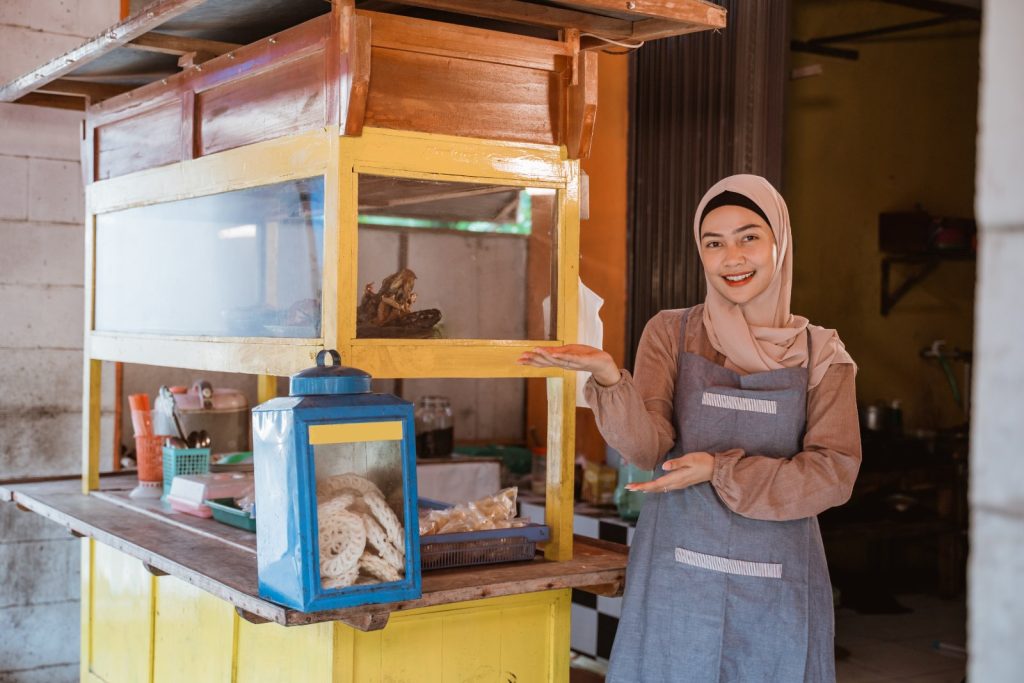
The scale is large. As reported by CNN Indonesia, PNM had the following as of June 2026:
- 12.4 million active Mekaar customers.
- Rp32.3 trillion in financing disbursed.
- 4,035 service units and 62,028 mentors, most of them women.
- 881,118 customer groups.
Mekaar is about more than credit. In the first half of 2026, PNM ran 26,776 training sessions with 723,883 participants. These included business cluster training, community meetings and product exhibitions. Since 2022, about 2.96 million customers have moved up a business class with higher income. PNM President Director Kindaris summed up the approach, saying financing creates greater value when it comes with mentoring.
How a Mekaar Loan Works in Practice
According to PNM’s Mekaar page, applicants must be Indonesian women aged 18 to 63 from low-income households. The loan must fund a new or existing business. Mekaar needs no collateral. Instead, members share responsibility for each other under a joint liability system called tanggung renteng.
First-time borrowers pass a feasibility check, then attend a financing preparation session. After that, members must attend group meetings every week. For Mekaar Syariah, the sharia-compliant version, PNM’s brochure says groups need at least 10 members, who pay instalments at the weekly meeting. Its financing starts at Rp2 million and can rise in stages to Rp15 million, based on ability to repay.
YUMEE: A New Pilot for Young Women Entrepreneurs in Indonesia
A newer effort targets younger business owners. On 11 June 2026, Indonesia’s Ministry of National Development Planning (Bappenas) and UNDP Indonesia launched two linked programmes in Jakarta. Both target young women who own ultra-micro businesses.
The first, Youth Ultra-Micro Entrepreneurs Empowerment (YUMEE), is funded by Singapore-based Temasek Foundation. It provides entrepreneurship training and business development support. The Southeast Asia Desk reported that it is open to women aged 16 to 30. During the one-year pilot, it will take only 100 participants.
The second, the Entrepreneurial Skills Development Fund (ESDF), tests new ways to finance skills development. It runs under the Global Accelerator on Jobs and Social Protection UN Joint Programme with backing from the Joint SDG Fund. The same report says YUMEE graduates can then qualify for its financial support. They need a completion certificate and a clear commitment to growing their business.
The pilot runs in five provinces: DKI Jakarta, Central Java, Central Kalimantan, West Sulawesi and East Nusa Tenggara. That mix of big-city and remote regions should show what works in different settings. “When women have access to the right support at the right time, their businesses can grow,” said Sujala Pant, Deputy Resident Representative of UNDP Indonesia, at the launch.
What Women Entrepreneurs in Indonesia Can Learn From These Models
The two approaches differ in size but share a few lessons.
1. Money works better with mentoring
Both programmes link funding to guidance. Regular contact with a mentor helps owners manage cash, price products and plan the next step.
2. Groups build confidence
Mekaar’s group model gives members a support network and shared responsibility, which helps first-time borrowers.
3. Pilots shape policy
YUMEE and ESDF are small by design. Still, the partners expect them to generate lessons for future policies and programmes in Indonesia.
Other Financing Options: KUR and UMi
Mekaar is not the only route for women entrepreneurs in Indonesia. Kredit Usaha Rakyat (KUR) is a government programme of low-interest loans for viable businesses without access to commercial credit. Under a 2026 regulation, KUR loans of up to Rp100 million need no additional collateral, the Ministry of MSMEs has confirmed. The financed business itself serves as the main collateral. The ministry also advised applicants not to use brokers or pay any fees.
For smaller needs, Ultra Micro Financing (UMi) serves businesses that are not yet bankable. Pusat Investasi Pemerintah (PIP), which works under a Ministry of Finance mandate, channels the funds through non-bank financial institutions. According to PIP, UMi covers capital needs of up to Rp20 million. Borrowers must not already receive another government credit programme. By 31 December 2024, UMi had reached 11.84 million borrowers.
How Women Entrepreneurs in Indonesia Can Get Started
For a woman who wants to join Mekaar, the process follows a few clear steps:
- First, confirm she meets the age, income and business criteria above.
- Next, prepare her e-KTP and family card (KK), plus those of a husband or guarantor.
- Also obtain consent from a husband or guardian. Renters need a domicile letter too.
- Then contact PNM through official channels, such as its call centre on 1500-654.
- After that, complete the feasibility check and preparation session, and attend weekly group meetings.
- Later, if the business outgrows group loans, look into options such as KUR.
For YUMEE, the launch announcements did not explain how to apply. Young women aged 16 to 30 in the five pilot provinces can watch UNDP Indonesia for updates.
Looking Ahead
Launched in June 2026, the one-year YUMEE pilot runs into 2027. Planners and partners will watch its results closely. Meanwhile, the Ministry of MSMEs plans to bring access to its development programmes onto one platform, SAPA UMKM.
Together with Mekaar’s reach, these efforts point to more choices for women entrepreneurs in Indonesia. Over time, more of them could turn a small home business into a steady income for their families and communities.
To learn more, visit the PNM official website.