
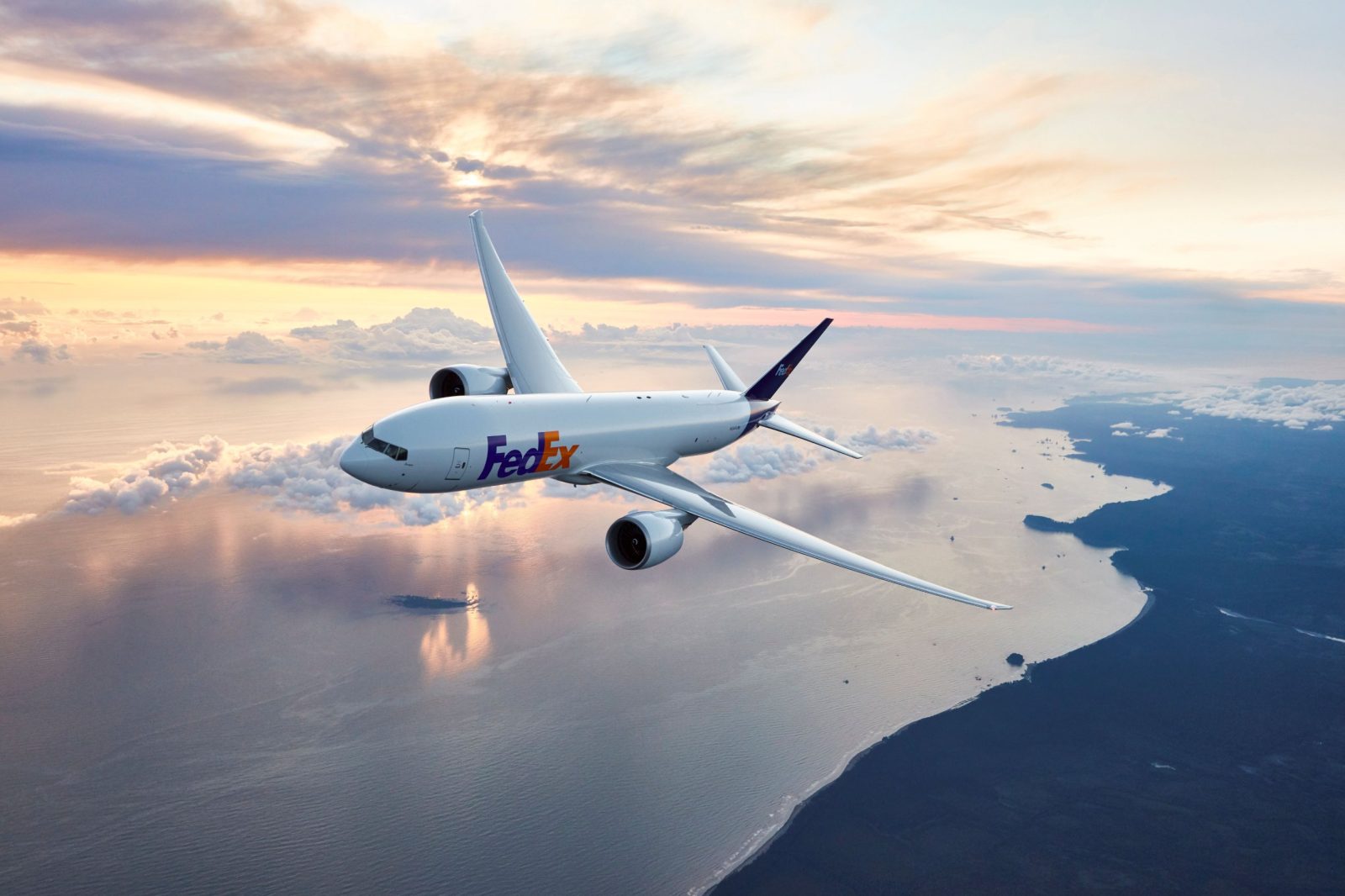

FedEx is adding more cargo space between Asia and the United States just as the year-end rush begins. The new FedEx trans-Pacific capacity comes from a five-times-weekly Boeing 777F service that adds 567,000 kilograms (1.25 million pounds) of space every week. Federal Express Corporation, one of the world’s largest express transportation companies, announced the expansion in Singapore on 6 November 2026.
The flights target four fast-growing sectors: semiconductors, artificial intelligence (AI) infrastructure, premium e-commerce and advanced industrial manufacturing. For shippers in these fields, the extra space arrives during one of the busiest trading periods of the year.
How the New FedEx Trans-Pacific Capacity Is Routed
The service runs on three routing variations. Flights link the FedEx Asia Pacific hub in Guangzhou with its sub-regional hubs in Shanghai, China, and Osaka, Japan. They also connect the FedEx gateway in Clark, the Philippines. From there, aircraft fly via Anchorage, Alaska, to the FedEx World Hub in Memphis, Tennessee.
Southeast Asian businesses can tap the new FedEx trans-Pacific capacity too. Shippers in Singapore, Malaysia, Thailand and Vietnam, as well as Hong Kong, can reach the United States through connections via Clark and Shanghai. As a result, they gain more flexibility to serve U.S. customers. They can also respond faster when customer demand shifts.
A New Gateway to Dallas–Fort Worth
The upgraded network also adds a five-times-weekly connection from Asia Pacific to Dallas–Fort Worth via Anchorage. The region is one of the leading technology and data centre markets in the United States.
This matters for companies that move high-value, time-sensitive goods. Semiconductors, servers and other critical parts for AI infrastructure often need fast and reliable air transport. The new link therefore gives manufacturers in Asia Pacific a more direct path to businesses across the Dallas–Fort Worth area.
Why FedEx Is Adding Trans-Pacific Capacity Now
Trade across the Pacific is growing quickly. According to the International Air Transport Association’s Air Cargo Market Analysis for July 2026, the Asia–North America corridor recorded 9% year-on-year growth that month. FedEx describes it as the fastest-growing major air cargo trade lane in the world.
At the same time, Asia Pacific remains central to global technology supply chains. A 2026 report by FedEx and Frost & Sullivan found that the region accounts for about 58% of global semiconductor industry revenue. RiseAsia looked at that shift in more detail when it reported on how the AI boom is reshaping the Asia Pacific semiconductor supply chain.
Meanwhile, retailers, manufacturers and tech companies are preparing for year-end demand spikes. In this climate, reliable air cargo space has become a competitive advantage. With more FedEx trans-Pacific capacity in place, customers can move critical inventory and react faster to market demand.
What FedEx Says About the Expansion
Salil Chari, president, Asia Pacific, FedEx, said global supply chains are becoming more connected. He pointed in particular to advanced manufacturing, AI-related industries and premium e-commerce.
“The addition of this capacity comes at a critical time as customers prepare for increased shipping volumes ahead of the year-end peak season,” Chari said.
“Businesses need reliable access to capacity, speed and global connectivity to serve customers and keep supply chains moving,” he added. “These additional flights strengthen links between Asia Pacific and key U.S. markets, including Dallas–Fort Worth, while supporting growth across semiconductors, technology and AI-driven industries.”
What More FedEx Trans-Pacific Capacity Means for Southeast Asia
The new service builds on a series of upgrades FedEx has rolled out across Asia Pacific over the past year. These include expanded flight links from Bangkok, Penang and Sydney to the Guangzhou hub.
For exporters in Malaysia, Thailand, Vietnam and Singapore, the extra FedEx trans-Pacific capacity means more choice during the busiest months of the year. Together, these investments aim to help businesses reach international markets more efficiently. They also support stronger, more resilient supply chains and help companies seize new growth opportunities.
FedEx has also been adding digital services for regional shippers. Earlier, RiseAsia covered how the FedEx import tool now handles customs and duty payments across APAC.