


In Bhutan, tens of thousands of citizens have chosen to spend part of their lives in an orange uniform, serving their communities for free. This article looks at De-suung Bhutan, the national volunteer programme known as the Guardians of Peace. It explains how it began, how volunteers are trained and why it offers a useful model of civic spirit for communities across Asia.
How De-suung Bhutan began
The programme started on 14 February 2011. It was set up under royal command after many young Bhutanese asked His Majesty The King for a way to serve their country. The first group had just 125 trainees.
The name explains the mission. “De” comes from dekyid, meaning peace, and “suung” means to guard or protect. Graduates are called De-suups, and they are easy to spot in their bright orange uniforms. People of many ages and backgrounds have joined, from students and teachers to civil servants and jobseekers.
What De-suung Bhutan volunteers learn
Training is short but intense. Early batches trained for about a month at the Tencholing training centre in Wangdue Phodrang. Over time, an accelerated programme of around three weeks was introduced, and batches now train at several centres across the country.
The course is described as value-based personal development. It aims to build discipline, teamwork and a sense of duty that goes beyond personal ambition. Participants have described a tightly scheduled day that includes:
- Morning physical training, drill and long runs
- Disaster awareness and basic emergency skills
- Practical activities such as swimming and rappelling
- Lessons in conduct, dress and table manners
Some De-suups go on to specialist courses. A basic search and rescue course, for example, covers knot systems, swift water rescue, firefighting and first aid. In January 2025, a batch became the first to train at the new National Search and Rescue Training Centre in Chhukha.
How fast the volunteer corps has grown
Growth has been remarkable. By February 2020, about 4,457 De-suups had completed training. A year later, the total had passed 20,000, as thousands signed up to help their communities. By February 2025, the programme had trained 50,006 De-suups, up from 125 in its first year.
For a country of fewer than a million people, that is a striking share of the population. It means that in almost every village and town there are people trained and ready to lend a hand.
What volunteers do in their communities
De-suups are volunteers, so they step in when called and return to their regular lives afterwards. Their work is varied:
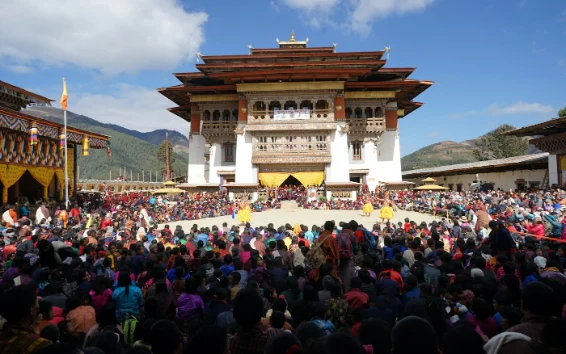
- Public events: helping with crowd management and guiding visitors at festivals such as tshechus and national celebrations
- Community projects: building water supply schemes for rural households, planting trees and joining cleaning drives
- Emergency support: assisting local authorities with relief work after fires and landslides
- Public health: supporting health workers during national health campaigns
Volunteers are mobilised through a dedicated mobile app and local group leaders. This lets the programme gather help quickly wherever it is needed.
The De-suung Skilling Programme
The programme has also grown into a pathway for learning. The De-suung Skilling Programme offers short, hands-on courses taught by local and foreign experts. It was created to give young volunteers practical skills that can lead to jobs or new businesses.
Courses now span more than 157 disciplines in four broad areas: construction, culinary arts, tourism and hospitality, and beauty and wellness. Trainees can learn plumbing, carpentry, baking, foreign languages, spa therapy and much more. In 2025, Bhutan began inviting trainers from around the world to teach at its centres.
Why De-suung Bhutan matters for civic spirit
At its heart, the programme is about giving back. It turns a wish to help into training, structure and real opportunities to serve. Young people gain confidence, friendships and skills, while communities gain a dependable pool of helpers.
Many countries in Asia are looking for ways to channel youthful energy into public good. De-suung offers a simple lesson: when people are trusted, trained and given a clear purpose, volunteering can become part of a nation’s everyday life.
For more on where the country is heading, see our explainer on Gelephu Mindfulness City, Bhutan’s new green economic hub.
To learn more, visit the De-suung official website.