



“Sign today and I’ll lock in this year’s price.” If you have had a facial or manicure in Singapore, you have probably heard some version of that line. It often comes while you lie on a treatment bed, halfway through a session. The pitch is one of the most familiar habits in the Singapore beauty industry. However, consumer complaint data suggests it is also one of the most costly.
Complaints Against the Singapore Beauty Industry Have Doubled
Beauty was the most complained-about sector at the Consumers Association of Singapore (CASE) in the first half of 2026. The watchdog received 1,124 complaints about beauty businesses from January to June. That is more than double the 558 it logged a year earlier.
Prepayment losses also climbed. According to CASE’s mid-year figures, reported losses from beauty prepayments exceeded S$1.9 million in the first six months of 2026. The rise follows a difficult 2025. That year, the sector drew 2,113 complaints, up 76.2% from 2024, along with S$2.1 million in prepayment losses.
CASE linked much of the recent spike to the sudden closure of several beauty and wellness businesses. As a result, many customers ended up holding packages they could no longer use. In addition, about 15% of beauty complaints involved alleged unethical sales tactics.
Why Pressure-Selling Persists
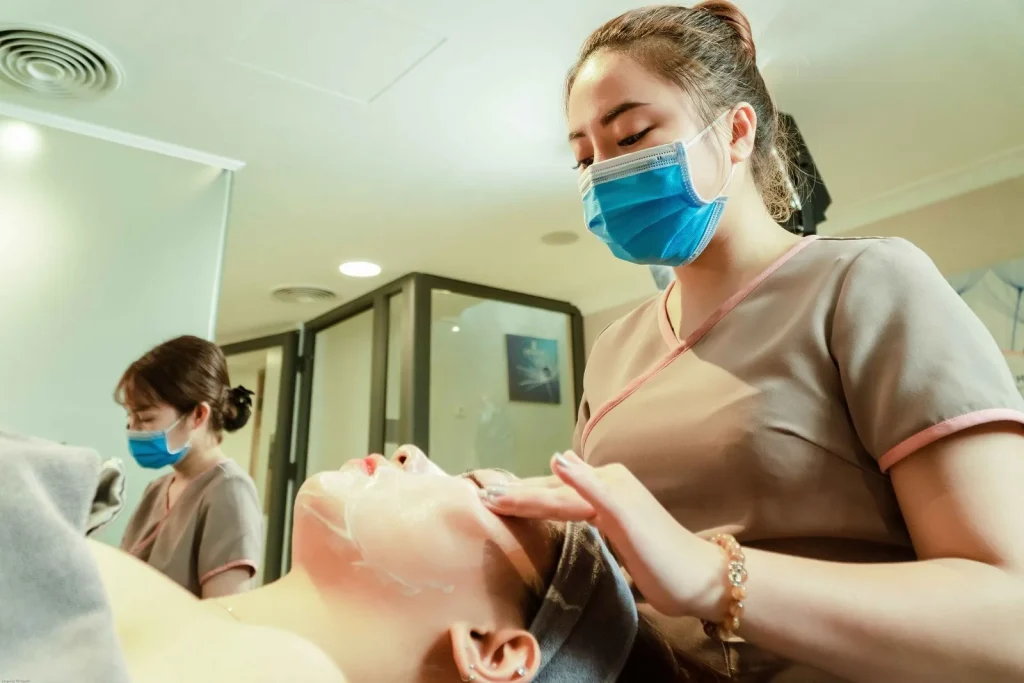
Two financial factors help explain why the hard sell has lasted so long.
First, payment plans make big packages easier to accept. Buy-Now-Pay-Later (BNPL) services and multi-month credit card instalments are now common at salon counters. So a S$3,000 package can start to feel like a modest monthly bill.
Second, costs remain high. Commercial rents and wages for skilled aestheticians in Singapore are still elevated. Therefore, many older salon models rely on large upfront payments to cover monthly overheads. In this setting, staff at many salons have strong reasons to close a package sale with every client.
Yet the model carries risk for both sides. When a salon pays today’s bills with money for services not yet delivered, one slow quarter can lead to a closure. Customers with unused sessions are usually the ones left out of pocket.
A Studio Built Without the Hard Sell
Crystal Lee, a mother of one, works from the other side of that counter. She founded Peachy Skin Bar in 2019 after her own frustrating experiences as a salon customer. From the start, she built the studio around a strict no-hard-sell policy and transparent pricing.

Instead of multi-thousand-dollar packages, the studio offers à la carte treatments and flexible memberships. Its income depends on repeat visits rather than large prepayments. Because of this, the business has to plan each month around customers choosing to come back.
Consultations also work differently. The studio uses skin analysis to plan treatment, not to close a sale. Its therapists learn not to comment on a customer’s skin flaws, a line some salons use to create urgency.
For Lee, relying on upfront sales leaves operators in the Singapore beauty industry exposed as costs rise.
Shifting Habits in the Singapore Beauty Industry
Her approach reflects a wider change in consumer habits. More Singaporean customers now prefer flexible, transparent and low-commitment services over lock-in contracts. A similar trust gap has also shaped other consumer services, such as home renovation in Singapore.
For smaller operators, the trade-off is steadier but slower cash flow. For customers, it means less money at risk if a business shuts down.
What to Ask Before Signing a Package
Before paying for any package, consumers can lower their risk with a few simple questions:
- How long is the package valid, and do unused sessions expire?
- Is there a cooling-off period, and how does the salon handle refunds?
- What happens to prepaid sessions if the salon closes?
- Can I pay per session instead of upfront?
While rents stay high, the hard sell is unlikely to vanish from the Singapore beauty industry. Still, rising complaint numbers show that more customers are pushing back. Meanwhile, some operators are betting that transparency can be a business model of its own.