

South Korea has approved the merger of Jin Air, Air Busan and Air Seoul, clearing the way for a single integrated Jin Air to take off on 17 March 2027. The Ministry of Land, Infrastructure and Transport gave its approval with conditions on 12 November, SBS reported. For travellers across Asia, the deal will reshape one of the region’s busiest low-cost networks and add more international flights from Busan.
Jin Air merger: what was approved
The transport ministry approved the corporate merger after a licensing review found no disqualifying issues, according to NoCutNews. The Korea Fair Trade Commission also cleared the deal. It found no harm to competition because all three carriers already belong to the same Hanjin Group. Vietnam’s competition authority had approved the Jin Air merger in October.
Jin Air is a subsidiary of Korean Air. Air Busan and Air Seoul are subsidiaries of Asiana Airlines. Once combined, the integrated Jin Air is expected to become South Korea’s largest low-cost carrier.
The approval comes with conditions focused on safety and passengers. Before the launch date, the airline must:
- complete inspections of changes to its safety operation system;
- obtain approvals from overseas aviation authorities; and
- report monthly to the ministry on how it is carrying out its plans, including consumer protection measures.
A few steps remain. Shareholders still need to approve the Jin Air merger at an extraordinary meeting, and the airline must secure a single air operator certificate.
Integrated Jin Air and Busan’s Gimhae airport
Busan is set to gain the most visible change. Under a “Busan second hub” plan, international routes from Gimhae International Airport will grow from 28 routes with 281 weekly flights to 33 routes with 339 weekly flights. That is five new routes and 58 more flights a week.
The plan also includes extra aircraft based in Busan for departures from the city. Gimhae will be developed as an independent maintenance base. The airline intends to hire more cabin crew and mechanics, working with local universities on training. Existing staff will keep their jobs, and Air Busan’s current facilities will be retained.
Some voices in Busan have asked for the combined airline’s headquarters to move to the city. The ministry has urged Korean Air and Jin Air to work closely with the local community, including Busan City, and said it will monitor how the plan is carried out.
What the Jin Air merger means for travellers
For passengers, the immediate picture is stable. Jin Air, Air Busan and Air Seoul continue to fly under their own brands until the launch date. Travellers holding tickets should keep an eye on airline notices as the switchover nears.
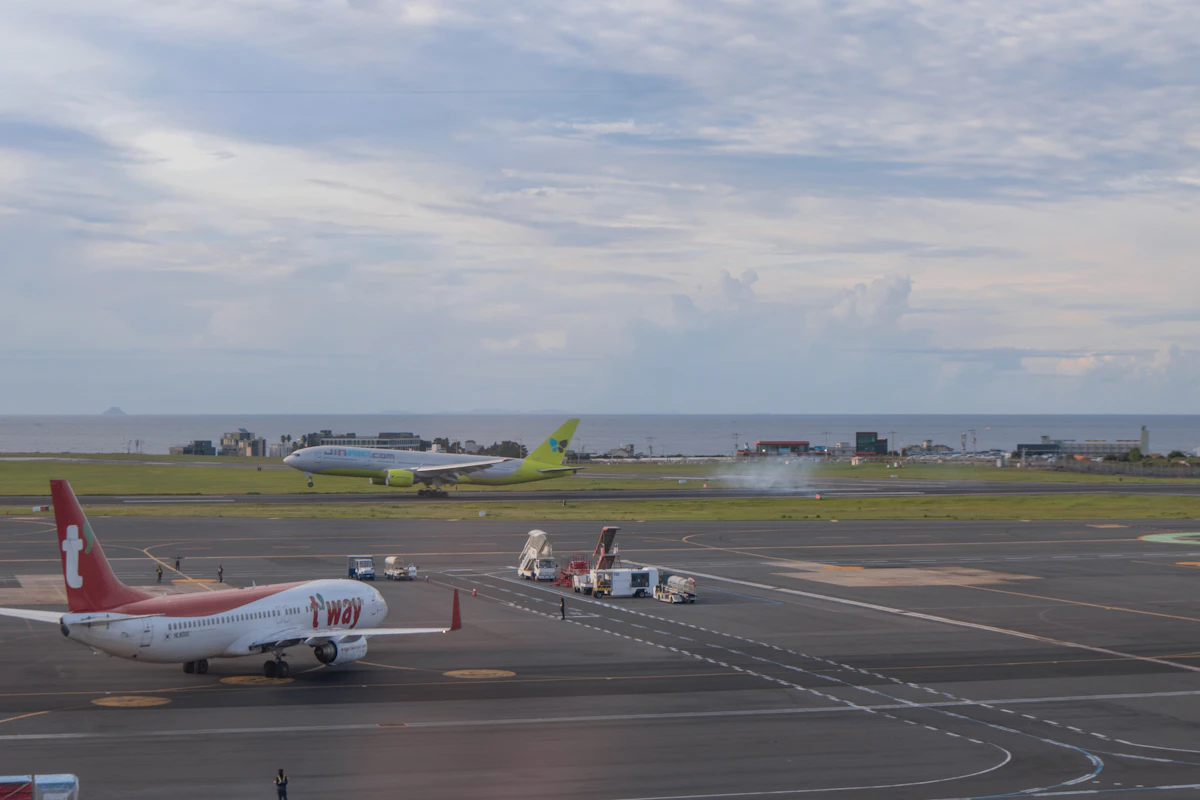
The airlines have already been preparing. Jin Air and Air Busan launched a codeshare, and the three carriers have held joint emergency drills and are standardising training and manuals, The Korea Herald reported in October. Jin Air has also invested about 22 billion won in in-house training, including full-flight simulators.
The merged network will link routes based at Incheon with those based in Busan, giving the airline footholds in both the Greater Seoul and Yeongnam regions. It also aims to grow international flights from regional airports, according to The Korea Herald. For travellers in Japan, Taiwan, Southeast Asia and beyond, this could mean more direct options into southern Korea without routing through Seoul. New gateways such as Vietnam’s Long Thanh International Airport are widening choices across the region too.
Park Jun-sang, director of the aviation industry division at the transport ministry, said the government would strictly manage and supervise the integration so that no safety problems occur.
Looking ahead to March 2027
With the main regulatory approvals now in place, attention turns to the shareholder vote, the single operating certificate and the final safety checks. If those go to plan, the integrated Jin Air will begin flying on 17 March 2027, with Busan’s Gimhae airport set to become a stronger gateway for travel across Asia.