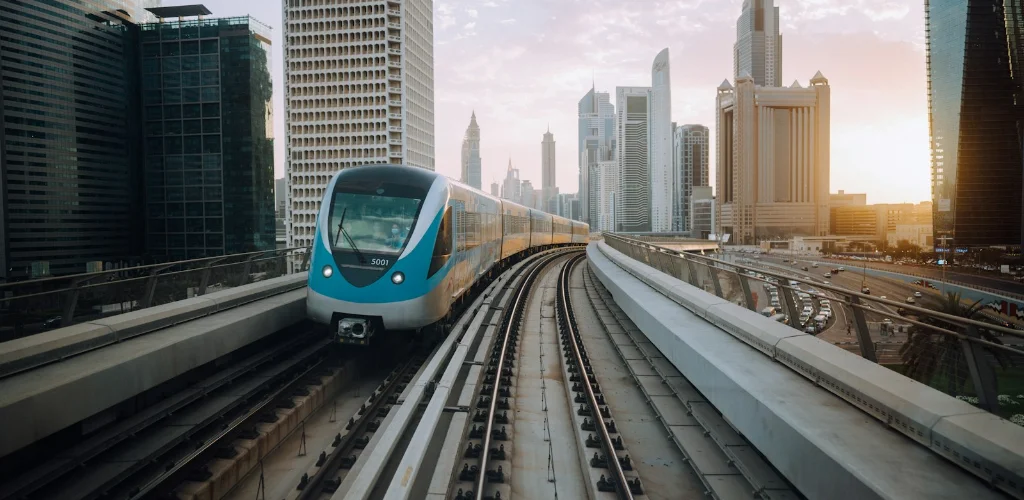

Dubai is building its next big rail link, and it will change how many people in the east of the city get around. The Dubai Metro Blue Line will add 30km of track and 14 stations, with services planned to start on 9 September 2029. This guide explains the route, the stations, the interchanges and where construction stands as of November 2026, for residents, commuters and visitors from across Asia.
Dubai Metro Blue Line at a glance
According to the Dubai Media Office, the Roads and Transport Authority (RTA) awarded the AED20.5 billion contract in December 2024. A consortium of MAPA and LIMAK of Turkey and CRRC of China is delivering it. The two Turkish firms handle civil works, while CRRC supplies the rail systems.
- Length: 30km, with about 15.5km underground and 14.5km elevated
- Stations: 14 in total, nine elevated and five underground
- Interchanges: three, linking to the Red Line, the Green Line and between the line’s own two branches
- Expected riders: about 200,000 a day by 2030, rising to 320,000 by 2040
- Target opening: 9 September 2029
Route and stations on the Dubai Metro Blue Line
The line is not a single straight route. It runs as two branches that meet at International City.
1. The 21km branch
This branch has 10 stations. It starts at the Creek interchange in Al Jaddaf, where riders can switch to the Green Line. It then passes Dubai Festival City, Dubai Creek Harbour, Ras Al Khor Industrial Area, International City and Dubai Silicon Oasis before ending at Dubai Academic City.
2. The 9km branch
This shorter branch has four stations. It begins at the Centrepoint interchange in Al Rashidiya on the Red Line. It then runs through Mirdif and Al Warqa before joining the other branch at International City 1.
3. Key stations to watch
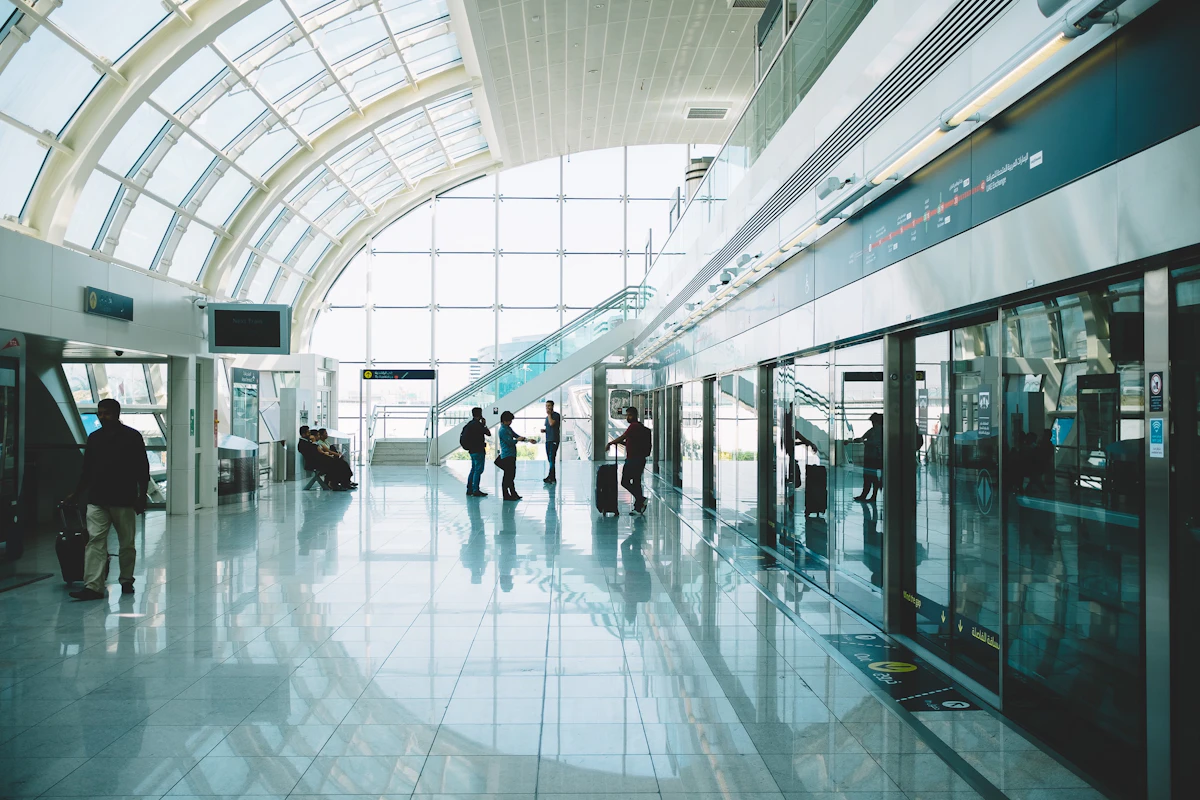
International City 1 will be an underground interchange and one of the largest on the network. At Dubai Creek Harbour, the RTA plans an iconic elevated station. The Dubai Media Office says it will stand 74 metres tall, which it describes as the world’s highest metro station. The main depot will sit in Al Ruwayyah 3.
Who benefits from the Dubai Metro Blue Line
The RTA estimates that the areas along the route will be home to about one million people. Many of these neighbourhoods, such as International City, Silicon Oasis and Academic City, have no metro station today. Students, families and workers in these districts should gain a faster link to the rest of the city.
The RTA says riders will be able to reach Dubai International Airport in about 20 minutes. It also expects traffic on the corridors served to fall by around 20 per cent. Trains are planned to run roughly every 90 seconds at peak, carrying up to about 56,000 passengers an hour in both directions.
Construction progress as of November 2026
Work began in June 2025. Five months later, the Dubai Media Office reported the project was 10 per cent complete, with a target of 30 per cent by the end of 2026. At that stage, more than 3,000 workers and over 500 engineers were on site.
Tunnelling began in May 2026. In July, the RTA marked the end of the first tunnelling phase, The National reported. Later that month, the Khaleej Times reported that a boring machine had finished its first 1.2km near the Dragon Mart station and was heading towards Al Warqa. The RTA has said the project remains on schedule.
How it fits the wider metro network
Today, the Dubai Metro and tram network covers 101km and 64 stations. The Red Line runs along Sheikh Zayed Road, and its Route 2020 branch added seven stations and 15km of track towards Expo City Dubai. The Green Line serves older districts around Deira and Bur Dubai. The Blue Line will be the first major link into the city’s eastern and southern suburbs.
Once it opens, the network will reach 131km and 78 stations, with the fleet growing from 140 to 168 trains. For anyone planning a move or a long stay, it is worth checking how close a home or campus is to a future station.
Also read: UAE Green Visa: Who Qualifies and How to Apply in 2026
What comes next
The next milestone to look for is the 30 per cent progress mark at the end of 2026. More tunnelling and station work will follow through 2027 and 2028, ahead of the target launch in September 2029. Readers can follow official updates on the RTA project page.
To learn more, visit the Roads and Transport Authority official website.