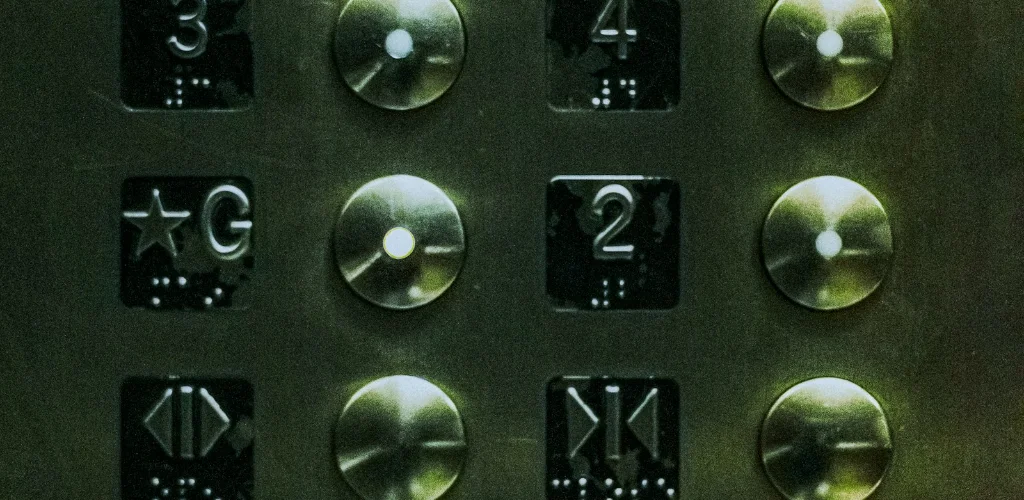

Many buildings in East Asia have no 4th floor because the word for “four” sounds almost the same as the word for “death” in Chinese, Japanese and Korean. To keep residents, guests and patients at ease, developers simply skip the number, or label the floor with a letter instead.
This custom is often called tetraphobia, from the Greek word for four. It is less a fear than a long-held courtesy, much like the way some Western hotels drop floor 13. Here is where the habit comes from, how it looks from city to city, and what it means if you are travelling or moving to the region.
Why no 4th floor: the sound of the word
The root of the custom is language. Chinese characters spread across East Asia over many centuries, and with them came Chinese-based readings of numbers. In each of these languages, the reading for four lands very close to the reading for death. In some cases only the tone differs, and in others the two words are identical.
How the number 4 sounds in East Asian languages
| Language | “Four” (四) | “Death” (死) | How close? |
|---|---|---|---|
| Mandarin | sì | sǐ | Same syllable, different tone |
| Cantonese | sei (tone 3) | sei (tone 2) | Same syllable, different tone |
| Japanese | shi (also read “yon”) | shi | Identical; “yon” is often used instead |
| Korean | sa | sa | Identical in the Sino-Korean reading |
Because the link is about sound, the number itself is not seen as evil. It is simply awkward to say “fourth floor” in a place where people live, sleep or recover from illness. Japanese has a second, native reading, “yon”, which many speakers use to sidestep “shi” altogether.
How the missing 4th floor looks across Asia
The custom shows up differently depending on the place, the type of building and the age of the property.
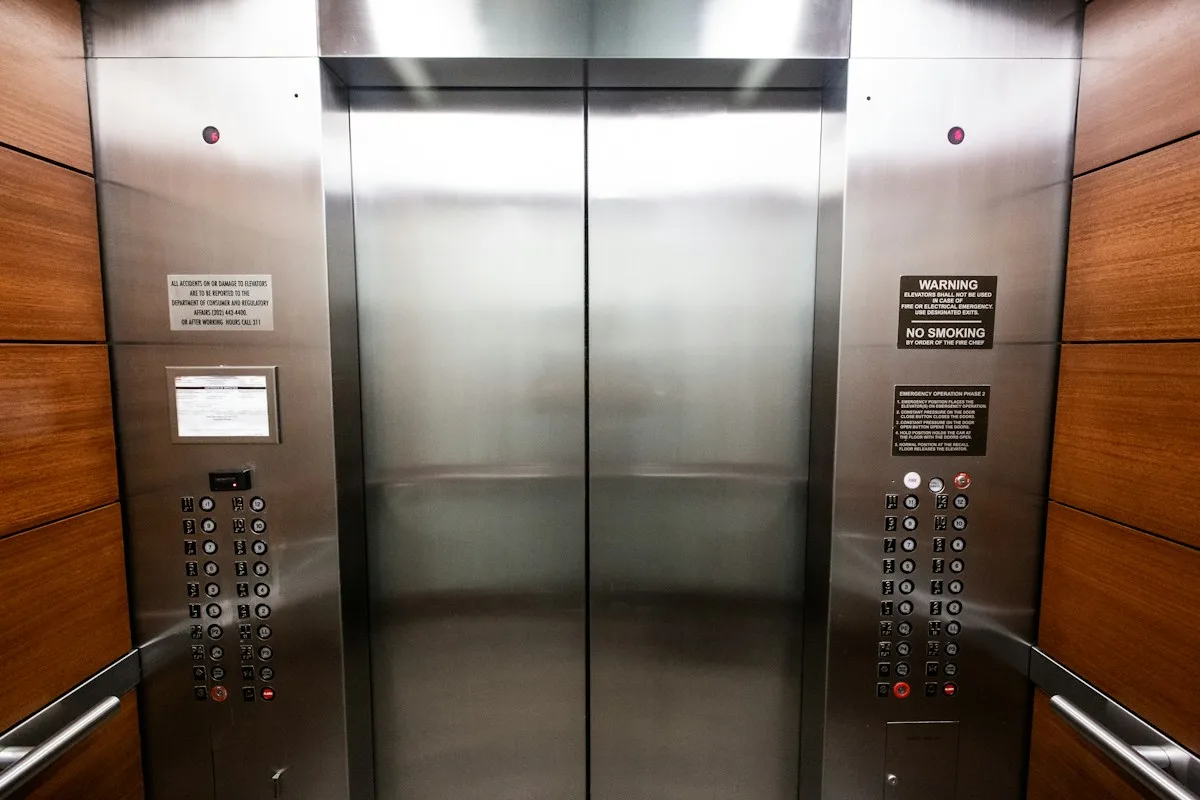
- Hong Kong: Many residential towers skip 4, 14 and 24, and some also skip 13. Combinations that sound like unlucky phrases in Cantonese are avoided too. In 2010 the Buildings Department announced floor-numbering guidelines for new developments. Floors should follow a logical, consecutive sequence, but leaving out 4, 13 and numbers ending in 4 is still accepted as a long-established local practice.
- Mainland China: Skipping 4 and 14 is common in apartment blocks and hotels. In 2012, Beijing authorities announced that new buildings in the capital must number addresses, units and floors in strict sequence, without picking or dropping “unlucky” numbers.
- Japan: Hotels and hospitals tend to avoid room numbers with 4 and also 9, since “ku” can mean suffering. Some hotels skip a room such as 404 entirely.
- South Korea: Many lifts go straight from 3 to 5, while others show an “F” (for four) on the button. Korea JoongAng Daily notes that Incheon International Airport has no Gates 4, 44 or 244, and the 63 Building in Yeouido has no 44th floor.
The habit has travelled with diaspora communities as well. Cantonese-speaking cities such as Macao share many of Hong Kong’s customs, which you can see alongside its Portuguese heritage on a walk through the Historic Centre of Macao.
Common workarounds for floor 4
| Workaround | What you see | Where it is common |
|---|---|---|
| Skip the number | 3, then 5 on the lift panel | Hong Kong, mainland China, South Korea |
| Skip every number ending in 4 | No 14, 24, 34 and so on | Hong Kong high-rises |
| Use a letter | “F” instead of 4 | South Korea |
| Use a split number | 3A or 3B, 5A | Mainland China |
| Skip 13 as well | No 13 in mixed-culture buildings | International hotels, Hong Kong |
| Avoid room numbers | No rooms ending in 4 or 9 | Japanese hotels and hospitals |
When several of these rules stack up, the number on the lift button can drift well above the real height. A 2010 Legislative Council paper notes that the “88th floor” at 39 Conduit Road in Hong Kong was in fact about 40 storeys above the ground floor. That case drew public criticism and helped lead to the 2010 guidelines.
Why 4 is avoided beyond buildings
The same thinking shapes prices wherever numbers can be chosen. Eight sits at the opposite end, because in Cantonese and Mandarin it sounds like the word for prosperity.
- House prices: A University of British Columbia study by Nicole Fortin, Andrew Hill and Jeff Huang, published in Economic Inquiry in 2014, looked at Greater Vancouver home sales. In neighbourhoods with an above-average share of ethnic Chinese residents, houses with addresses ending in 4 sold at about a 2.2% discount, while those ending in 8 sold at about a 2.5% premium.
- Car plates: Hong Kong’s Transport Department auctions special registration marks. At its Lunar New Year auction on 16 February 2025, the plate “88” sold for HK$11.4 million, as reported by the SCMP and The Standard.
- Phone numbers: Hong Kong mobile numbers long avoided starting with 4. When the Office of the Communications Authority opened the 4, 7 and 8 prefixes in February 2018 to ease a shortage, operators had asked for the 4 range to be held back as long as possible. The regulator said leaving it unused could not be justified.
Number meanings matter across the region, not only in Chinese-speaking places. Thailand has its own culture of prized plate numbers, explained in our guide on how to read Thai car plates.
Tips for travellers and expats
The missing floor is rarely a problem once you know about it. A few habits help.
- Check the lift panel, not the address. If you are told “floor 15”, count on the buttons rather than assuming it is the 15th level up.
- Ask about real height when renting or buying. A high floor number may not mean a higher view. Ask how many storeys the building actually has.
- Learn the fire-exit route. Stairwell signs may still show the actual level, so note both numbers on your first day.
- Ask for a room change quietly if you prefer. Some local guests will request a different room; hotel staff usually understand.
- Think about numbers when giving gifts. Sets of four are best avoided as a precaution. In Hong Kong, giving a clock is also a known faux pas, because the phrase sounds like attending a funeral.
Many of these customs sit alongside very modern lives. In South Korea, for example, the same society that skips gate 4 also builds national routines as precise as the Suneung university entrance exam.
FAQ
Why doesn’t Chinese building have a 4th floor?
In Mandarin and Cantonese, “four” sounds very like “death”, differing only in tone. Developers skip floor 4, and often 14 and 24, so the numbers feel more comfortable to buyers and tenants.
Why do hotels not have a 4th floor?
Hotels serving East Asian guests avoid the number so no one feels uneasy about their room. Many international hotels also skip 13 to cater to Western guests.
Why is 4 not used in China?
It is used every day, but people tend to avoid it where they have a choice, such as floors, addresses, phone numbers and car plates. In 2012 Beijing announced that new buildings must number floors and units in sequence without skipping it.
Why is there no floor 4 in Korea?
The Sino-Korean word for four, “sa”, is the same as the reading of the character for death. Many Korean lifts skip from 3 to 5 or label the floor “F” instead.
The missing 4th floor is a small window into how language shapes daily life in East Asia. Newer rules in Hong Kong and Beijing aim to keep numbering clear for emergency services. Even so, the habit is likely to stay in lift panels, room keys and price tags for years to come. For visitors, a quick look at the buttons is usually all it takes.