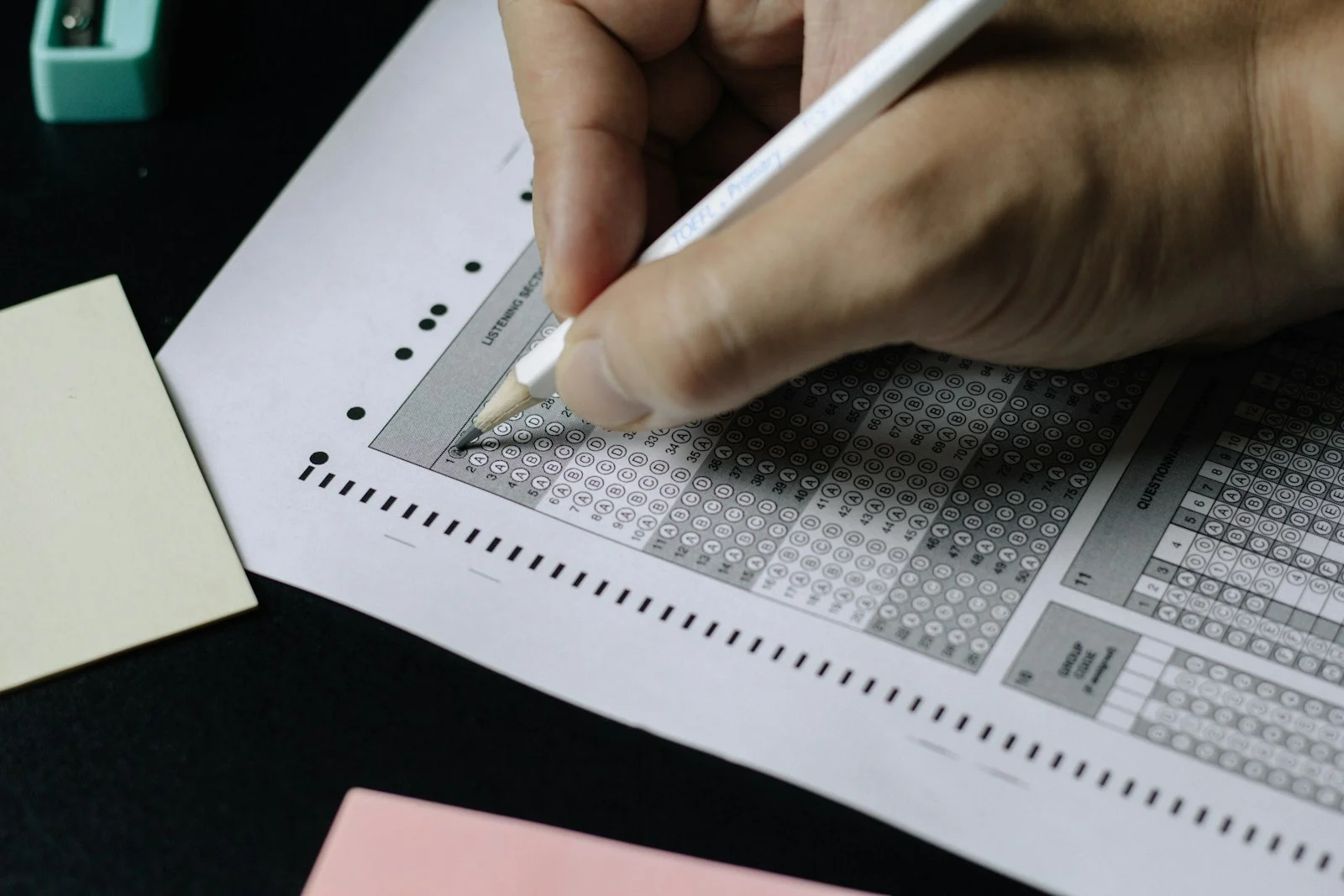

The gaokao is China’s National College Entrance Examination, the test that decides which university most students on the Chinese mainland can attend. It starts on 7 June every year, lasts two to four days depending on the province, and in 2026 drew 12.9 million registered candidates.
The name 高考 (gāokǎo) simply means “higher exam”. It is organised by the Ministry of Education together with provincial examination authorities, and its results decide undergraduate places at universities across the country. This explainer is part of our Asia explainers series and a companion to our guide to South Korea’s Suneung.
Gaokao in numbers
| Exam year | Registered candidates |
|---|---|
| 2024 | 13.42 million (record) |
| 2025 | 13.35 million |
| 2026 | 12.9 million |
The Ministry of Education announced the 2026 figure on 3 June, China Daily reported. It was about 450,000 lower than in 2025, the second decline in a row, which The Star linked to more teenagers choosing routes other than academic degrees. The exam began on Sunday, 7 June 2026, and ran for two to four days depending on the region.
Gaokao subjects: the 3+1+2 and 3+3 models
Every candidate sits three compulsory papers: Chinese, mathematics and a foreign language, each worth 150 points. What comes next depends on the province.
- 3+1+2 model: candidates choose physics or history (100 points), then two of chemistry, biology, politics and geography (100 points each). The two second-choice subjects are converted into graded scores based on rank within the province, and the total is 750.
- 3+3 model: candidates choose any three electives from physics, history, chemistry, biology, politics and geography. Zhejiang also offers technology.
The reform has been rolled out in groups since 2014. By the 2025 exam it covered 29 provincial-level regions and 98% of candidates, China Daily reported, so the old split into an arts stream and a science stream has almost disappeared. The table follows an Australian Embassy briefing on the reform.
| Model | Provinces and cities | First reformed exam |
|---|---|---|
| 3+3 | Shanghai, Zhejiang | 2017 |
| 3+3 | Beijing, Tianjin, Shandong, Hainan | 2020 |
| 3+1+2 | Hebei, Liaoning, Jiangsu, Fujian, Hubei, Hunan, Guangdong, Chongqing | 2021 |
| 3+1+2 | Jilin, Heilongjiang, Anhui, Jiangxi, Guangxi, Guizhou, Gansu | 2024 |
| 3+1+2 | Shanxi, Inner Mongolia, Henan, Sichuan, Yunnan, Shaanxi, Qinghai, Ningxia | 2025 |
Sichuan, which switched in 2025, shows how the graded scores work: the two second-choice subjects are sorted into five bands by provincial ranking, so a candidate’s position matters more than the raw mark, a guide to the province’s first reformed exam explains.
How gaokao scores become university places
Admission is organised province by province. Each university works to pre-determined quotas for every province, set with the province’s population and level of development in mind as well as the university’s own location, according to the Australian Embassy briefing. In practice, candidates compete mainly with others from their home province, and western regions such as Qinghai, Tibet and Xinjiang receive extra central support on scoring and quotas.
Results are usually released in late June. Candidates then submit a ranked list of universities and majors, and offers follow each province’s score lines and quotas.
Why the gaokao is seen as so hard
The difficulty comes less from any single question than from scale and stakes. Millions of candidates take broadly the same papers over a few days, and the result largely decides where, and whether, they study. Places at the most selective universities are scarce: a China Daily commentary noted that only about 5% of candidates win a seat at one of the country’s top 100 universities.
Exam days are treated as a national event. For 2026, the ministry said local authorities had arranged support covering transport, accommodation, food safety, noise control and psychological counselling.
Recent rules around the gaokao
- No hype about top scorers: schools, local authorities and media may not promote “top scorers”, high scores or admission rates. The ministry restated the ban in June 2026, China Daily reported.
- Simpler admission letters: universities have been told to return to plain one-page offer letters instead of elaborate welcome packages, Sixth Tone reported.
- Integrity education: the ministry says it has stepped up integrity education for candidates alongside its usual measures to keep the exam fair and orderly.
Gaokao vs Suneung
| Gaokao (China) | Suneung (South Korea) | |
|---|---|---|
| When | From 7 June | November |
| Length | Two to four days | One day |
| Scoring | Points, usually out of 750 | Grades by subject |
Both exams carry enormous weight, but the gaokao’s size and provincial quota system make it unique. Our Suneung explainer covers how Korea’s exam day works.
FAQ
What is the gaokao in Chinese?
It is 高考 (gāokǎo), short for 普通高等学校招生全国统一考试, the national unified examination for admission to regular higher education institutions.
When is the gaokao held?
It starts on 7 June every year, so the 2027 exam is expected to begin on Monday, 7 June 2027. Most provinces run it over two to four days.
Is the gaokao harder than getting into Harvard?
They are hard to compare. Harvard uses a holistic application, while the gaokao is a single exam taken by millions, with places at top Chinese universities allocated mainly by score and provincial quota.
What is the highest gaokao score?
Most provinces mark out of 750. Individual top scores are no longer celebrated in public, because the Ministry of Education bans publicity about top scorers.
With candidate numbers falling and the reformed exam now almost nationwide, the gaokao is slowly changing, but it remains the main route into Chinese universities. International applicants normally apply through separate admissions instead; our guide to the Chinese Government Scholarship explains one funded route, and our explainer on the fear of the number four is another look at how Asia thinks.