

Filipinos celebrate Christmas early because the season is the most important time of the year for faith, family and food, and many people simply want it to last as long as possible. The countdown starts on 1 September, the first of the “ber months”, and the celebrations carry on until mid-January.
That makes the Philippines home to what is often called the world’s longest Christmas season. Here is how it works, where the tradition comes from, and the key dates to know for 2026.
What are the “ber months”?
The “ber months” are September, October, November and December, the four months whose English names end in “-ber”. For many Filipinos, 1 September is the unofficial start of Christmas. Radio stations begin slipping carols into their playlists, homes put up the first decorations, and malls start their holiday displays and sales.
Nobody declares the season open. It is a shared habit that has grown over decades.
The Jose Mari Chan meme
Every year on 1 September, Filipino social media fills with images of Jose Mari Chan, the singer and businessman often called the country’s “King of Christmas Carols”. His 1990 Christmas album remains a seasonal favourite in malls and homes.
The joke is simple: photos of the smiling singer are edited to peek out from behind walls, calendars or doorways, as if he is waking up from a long nap now that Christmas is near. It is affectionate fun, and many Filipinos say they only feel that Christmas has started once they see the first one.
Why do Filipinos celebrate Christmas so early? Four reasons
1. Spanish-era Catholic heritage
Christianity arrived with Spanish colonisation, which took hold after 1565, and the Philippines remains Asia’s largest Catholic-majority nation. More than three centuries of church festivals shaped a calendar in which Christmas sits at the very top. Many of today’s customs, from dawn masses to star lanterns, began as church traditions in that period.
2. Family comes first
Christmas is above all a family reunion. Millions of overseas Filipino workers (OFWs) live and work abroad, and many plan their annual leave around December so they can be home for the holidays. A long run-up gives everyone time to plan, save and look forward to being together.
3. The 13th month pay
Private-sector rank-and-file employees are entitled by law to a 13th month pay worth at least one-twelfth of their total basic salary for the year. The Department of Labor and Employment reminds employers each year that it must be paid no later than 24 December. That extra money arrives just in time for gifts, travel and the Christmas Eve feast. See our guide to how 13th month pay is computed for the details.
4. Malls and commerce
Retailers treat the ber months as their peak season. Malls roll out giant trees, light shows and bazaars from September onwards. The earlier the decorations go up, the longer the shopping season runs.
Simbang Gabi and Misa de Gallo
The religious heart of the season is Simbang Gabi, a series of nine masses held from 16 to 24 December. Traditionally they are said before sunrise, which is why they are also known as Misa de Gallo, the “mass of the rooster”. Historians trace the practice to the Spanish period, when friars held dawn masses so farmers could attend before heading to the fields. Missionaries are believed to have brought the custom from Mexico.
Many parishes now also hold evening “anticipated” masses for people who cannot attend at dawn. A popular belief says that anyone who completes all nine masses can make a special wish. Afterwards, churchgoers often buy warm rice cakes such as bibingka and puto bumbong from stalls outside the church.
Parol lanterns and the Giant Lantern Festival
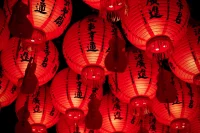
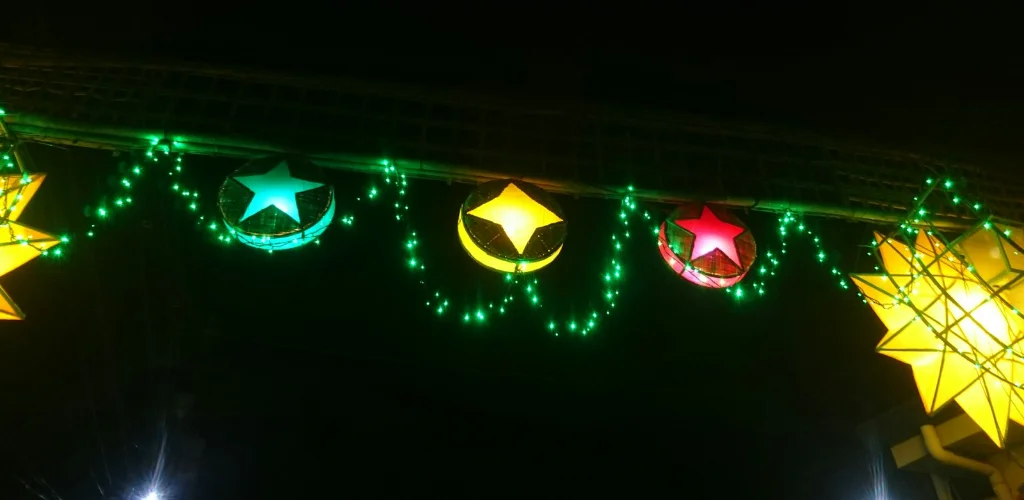
The parol is a star-shaped lantern that represents the Star of Bethlehem. Once made of bamboo and paper, it now also comes in capiz shell and LED versions. You will see parols hanging from homes, offices and streetlights across the country from as early as September.
The city of San Fernando in Pampanga is famous for its parol makers and is often called the “Christmas Capital of the Philippines”. Its Giant Lantern Festival, first held in 1908, sees neighbourhoods compete with lanterns about six metres tall. According to a 2025 report in Philstar, each one can carry around 12,000 bulbs, with teams turning hand-operated rotors to make the lights dance in patterns. The festival is usually held in mid-December.
Noche Buena and the end of the season
On Christmas Eve, families attend mass and then sit down to Noche Buena, a midnight feast. Typical dishes include ham, queso de bola (a round ball of cheese), spaghetti in a sweet sauce, and roast pork or lechon. Gifts are often opened at midnight.
The season does not end on 25 December. In the Philippines, the Feast of the Three Kings (Epiphany) falls on the first Sunday of January, and many families keep their decorations up until then. Some areas carry on until the Feast of the Santo Niño, the Holy Child, on the third Sunday of January. That day is also when Cebu holds its famous street celebration, explained in our Sinulog festival guide.
Key dates of the Filipino Christmas season
The table below shows the main dates for the 2026 to 2027 season. Holiday status comes from Proclamation No. 1006, which sets the official 2026 holidays (as of November 2026).
| Date | Occasion | Status |
|---|---|---|
| 1 Sep 2026 (Tue) | Start of the “ber months”; carols and decorations begin | Informal |
| 8 Dec 2026 (Tue) | Feast of the Immaculate Conception | Special non-working day |
| 16 to 24 Dec 2026 | Simbang Gabi / Misa de Gallo (nine dawn masses) | Religious |
| Mid-December | Giant Lantern Festival, San Fernando, Pampanga | Local event |
| 24 Dec 2026 (Thu) | Christmas Eve and Noche Buena; deadline for 13th month pay | Additional special non-working day |
| 25 Dec 2026 (Fri) | Christmas Day | Regular holiday |
| 30 Dec 2026 (Wed) | Rizal Day | Regular holiday |
| 31 Dec 2026 (Thu) | Last day of the year | Special non-working day |
| 1 Jan 2027 (Fri) | New Year’s Day | Regular holiday |
| 3 Jan 2027 (Sun) | Feast of the Three Kings (Epiphany) | Religious |
| 17 Jan 2027 (Sun) | Feast of the Santo Niño; Sinulog in Cebu | Religious / local |
For the full list of national holidays, including how they are moved or added during the year, see our guide to Philippine holidays.
FAQ
Which country celebrates Christmas the earliest?
The Philippines is widely seen as the country with the earliest and longest Christmas season. Celebrations begin informally on 1 September and continue until January.
How early is Christmas in the Philippines?
Christmas starts with the “ber months” on 1 September, when carols, decorations and holiday sales begin. The formal religious build-up starts with Simbang Gabi on 16 December.
When was Christmas first celebrated in the Philippines?
Christmas arrived with Spanish missionaries after colonisation began in 1565. Historians believe the first organised celebrations were most likely held in Cebu, the first Spanish settlement, in the late 1560s, and dawn Christmas masses are recorded from the 1700s.
Why is Christmas being celebrated so early?
Filipinos start early because Christmas is their biggest family celebration. Catholic heritage, OFWs coming home, the 13th month pay and long mall shopping seasons all help stretch the festivities.
As the ber months roll on, expect the first Jose Mari Chan posts, parols and mall countdowns to return right on cue every September. If you plan to visit the Philippines in December, book flights early, as OFWs heading home fill planes fast, and try to catch at least one dawn mass and a slice of hot bibingka. Like the missing fourth floor in many Asian buildings, the long Filipino Christmas is a custom that says a lot about the culture behind it.