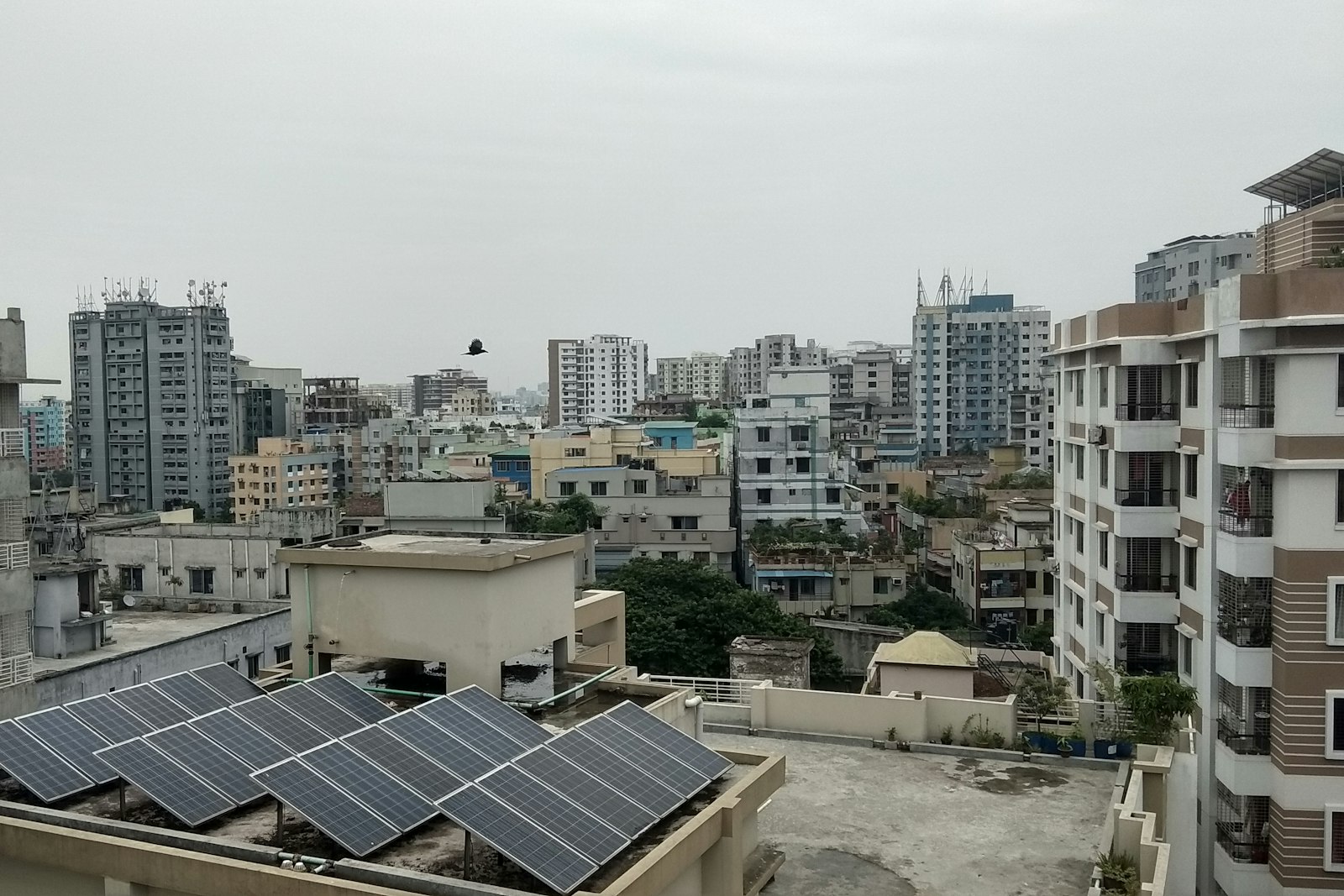

Over two decades, Bangladesh solar home systems replaced kerosene lamps in millions of rural homes. The state-owned Infrastructure Development Company Limited (IDCOL) and dozens of local partner organisations ran one of the world’s largest off-grid solar efforts. This explainer looks at how the model worked, what it achieved and what came next.
Bangladesh Solar Home Systems: How It Began
IDCOL launched its solar home systems programme in January 2003. At the time, only about 27% of rural people had electricity, according to a World Bank feature story. Many villages were far from the national grid, and families relied on kerosene for light.
A solar home system is simple. It pairs a rooftop panel with a battery, a charge controller, a few LED lights and a socket for charging a phone or running a small fan or television.
How the Bangladesh Solar Home Systems Model Worked
1. Local partners sold and installed
IDCOL did not sell panels itself. It worked through partner organisations, including NGOs, microfinance institutions and private firms. According to IDCOL’s programme page, 56 partner organisations took part. They found customers, installed systems and collected payments.
2. Microcredit made solar affordable
Households paid a small deposit, then monthly instalments over a few years, and owned the system at the end. In 2014, Prothom Alo reported that a typical instalment was close to the roughly Tk 280 a remote family spent each month on kerosene. Once the loan was repaid, the power was effectively free.
3. IDCOL provided finance and standards
IDCOL refinanced its partners with low-cost credit and grants, and set technical standards for approved equipment. By December 2020, it had channelled US$504.5 million in credit and US$96.62 million in grants into the programme.
4. Local technicians kept systems running
Partners trained village technicians to install and repair systems. Prothom Alo reported about 23,000 trained technicians in 2014 at one leading partner’s technical centres, around 80% of them women.
Bangladesh Solar Home Systems by the Numbers
- About 4.13 million systems installed, according to IDCOL as of November 2026
- Around 18 million people reached, roughly 12% of the population
- A peak of 816,000 units sold in 2013 alone
- US$416 million in World Bank financing across consecutive projects
Impact on Households and Jobs
Solar light changed evening life in villages. Children could study after dark, small shops stayed open longer, phones could be charged at home and kerosene smoke left the house. The World Bank estimated the net benefit to solar households at about US$745 million in present-value terms.
The programme also created work in sales, installation and repair. In 2014, then IDCOL chief executive Mahmood Malik told The Daily Star that it had generated around 50,000 direct and indirect green jobs.
What Came Next After Solar Home Systems
As the national grid reached more villages, demand for new home systems slowed. IDCOL applied the same partner-based model to new clean energy areas:
- Solar irrigation pumps: IDCOL has financed 1,495 pumps, irrigating over 34,000 hectares and serving more than 70,000 farmers, The Financial Express reported in October 2025. Its target is 10,000 pumps by 2030.
- Mini-grids: solar mini-grids supply small local networks in remote areas still beyond the grid.
- Clean cooking: IDCOL has financed more than four million improved cookstoves, which burn less fuel and produce less smoke. It aims for full clean cooking coverage by 2030.
Why It Matters for Asia
The lessons travel well: trusted local lenders, small and predictable payments, strict equipment standards and trained local technicians. Other countries with off-grid communities continue to study the Bangladesh experience. Solar is also spreading in other parts of the region, from village rooftops to industrial zones in the Philippines.
To learn more, visit the IDCOL official website.