

Singapore has launched SPIRE Asia, a programme built to draw private investment into climate adaptation across Southeast Asia’s agri-food systems. Unveiled on 10 November 2026 in Antalya, Türkiye, it pairs a data platform and a project pipeline with a blended finance fund that aims to mobilise up to US$500 million. For farmers, food companies and investors in the region, it is a new route to funding for projects that have long struggled to find backers.
The full name is Scaling Projects and Investments for Resilience in Asia. It was announced by Grace Fu, Singapore’s Minister for Sustainability and the Environment, at the Singapore Pavilion.
Why SPIRE Asia Is Needed
Rising temperatures, shifting rainfall and more frequent extreme weather are already affecting farm output across the region. Yet money for adaptation has not kept pace with the risk. Many promising projects are too small, too early-stage or lack the data that investors need before they commit capital.
The data gap matters. As The Straits Times reported, investors may see agriculture as riskier than it really is simply because reliable information is missing. Timing is another hurdle. Some adaptation projects take 10 to 15 years to pay off, while a typical commercial fund runs for about ten years.
SPIRE Asia is designed to tackle each of these barriers in turn, moving a project from first idea to finished investment.
The Three Pillars of SPIRE Asia
The programme rests on three connected parts, each with a clear job:
- Data Platform: brings together climate, agricultural and investment data to spot risks and opportunities, guide decisions and measure resilience results.
- Market Development Facility: finds, develops and bundles adaptation opportunities into investment-ready projects, then links them with investors, buyers and delivery partners.
- Blended Finance Fund: targets up to US$500 million and uses catalytic capital to absorb specific risks, improving the risk-return profile for commercial investors.
The data platform and the market facility are not limited to deals the fund backs. They will also support adaptation projects financed in other ways, which widens their reach across the region.
What SPIRE Asia Means for Smallholder Farmers
Smallholders produce much of Southeast Asia’s food, but they often face scattered data and limited access to credit. The data platform includes a new Solutions Centre for Regional Smallholder Farmers, which Singapore is setting up with ecosystem partners. According to The Straits Times, the centre is slated to launch by the end of 2027.
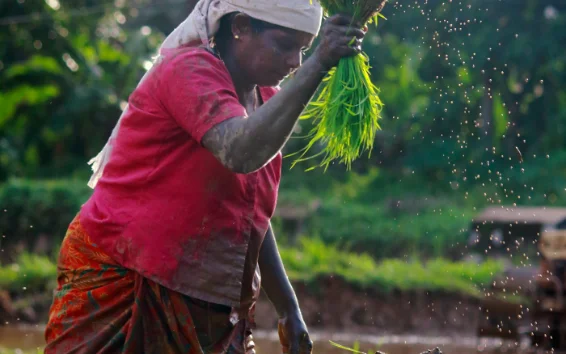
The centre will build a data insights platform for investors, researchers, project developers and solution providers. Better information on yields, weather and farm practices could help lenders price risk more fairly. Over time, that could make it easier for small farms to access the tools and finance they need to cope with a changing climate.
SPIRE Asia and the Opportunity for Investors
Blended finance mixes public or philanthropic money with private capital. The catalytic portion takes on risks that commercial investors would usually avoid. That can unlock deals that might otherwise stall because of their size, terms or timeline.
The fund will focus on adaptation investments across the agri-food value chain, from farm inputs to storage and supply. Caproasia notes that the programme is also meant to open doors for Singapore-based financial institutions, investors and agri-tech firms to join regional deals and scale their solutions.
Singapore has some experience here. Its earlier FAST-P blended finance initiative, which aims to raise up to US$5 billion, has already deployed close to US$240 million into climate projects in the region, The Straits Times reported.
Who Is Behind SPIRE Asia
The programme was developed jointly by the National Climate Change Secretariat, the Monetary Authority of Singapore and Enterprise Singapore. It was launched in partnership with Temasek Trust, the philanthropic arm of Temasek Holdings.
Temasek Trust leads the Market Development Facility, working with regional and global partners to identify projects. Enterprise Singapore leads the Data Platform, with support from Temasek Trust. A steering committee drawn from all four organisations coordinates the work and is chaired by Ravi Menon, Singapore’s Ambassador for Climate Action.
Looking Ahead
Detailed timelines for the fund and the first projects have yet to be announced. Even so, SPIRE Asia offers a practical model for turning climate risk into investable opportunity. If it works, it could help keep food flowing across Southeast Asia while giving farmers, agri-food businesses and investors a stronger footing for the years ahead.
Related reading: Building Resilient Aquaculture Systems for Asia’s Growing Food Needs