

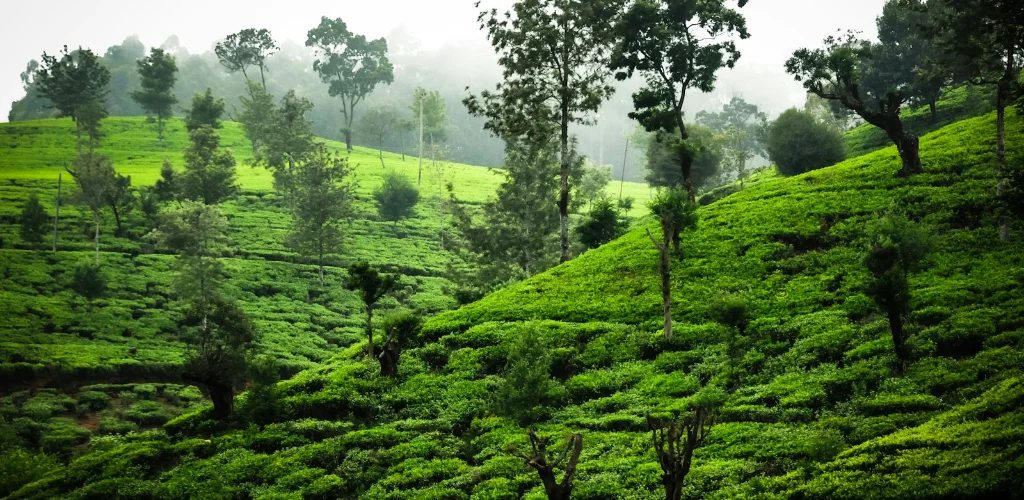

Sri Lanka’s tea, sold to the world as Ceylon tea, is one of Asia’s best-known agricultural exports. This guide explains how the Ceylon tea industry grows, grades and sells its leaf, and what the latest figures show as of November 2026. For readers across Asia, it maps a sector that keeps finding new ways to add value.
Ceylon Tea Industry at a Glance
Sri Lanka ranks fourth among the world’s tea producers and third among exporters, according to the Tea Exporters Association Sri Lanka. It is also the largest producer of orthodox tea, the traditional style made from rolled whole or broken leaves.
The country applies the international ISO 3720 standard as its minimum quality benchmark for black tea.
How Ceylon Tea Is Grown by Elevation
The industry sorts its tea by the height at which it grows. Low grown tea comes from sea level to about 600 metres. Mid grown tea comes from 600 to 1,200 metres. High grown tea comes from estates above 1,200 metres.
1. High Grown Regions
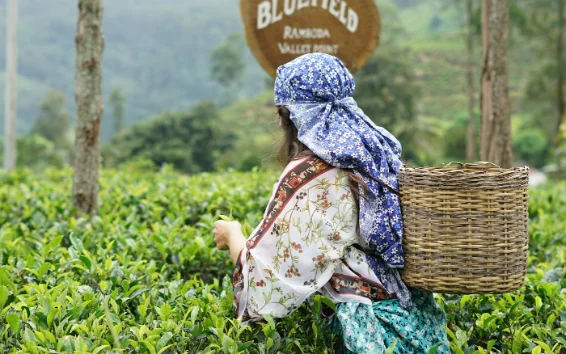
Nuwara Eliya sits at around 2,000 metres on average and is known for a pale, golden and delicately fragrant cup. Dimbula, with estates above 1,250 metres, yields a mellow, golden-orange liquor. Uva, between 1,000 and 1,600 metres, is prized for a smooth taste and distinctive aroma. Uda Pussellawa produces a darker, tangy tea with medium body.
2. Mid Grown Regions
Kandy, the historic heart of the industry, produces bright, coppery teas that are strong and full-bodied.
3. Low Grown Regions
Ruhuna in the south grows full-flavoured black teas with long, attractive leaves, including tippy grades. Sabaragamuwa yields a dark liquor with a reddish tint and a hint of caramel. Low grown teas are a large share of the crop, making up about 60% of 2025 production.
From Leaf to Grade: Ceylon Tea Processing
At the factory, fresh leaf is first withered on troughs while air lowers its moisture. It is then rolled to break the leaf cells, left to oxidise until it browns, and fired with hot air. Finally, the made tea is shaken over vibrating mesh and sorted by leaf size into grades.
The Colombo Tea Auction
Most Ceylon tea is sold through the Colombo Tea Auction, which held its first sale on 30 July 1883. The Colombo Tea Traders’ Association, formed in 1894 under the Ceylon Chamber of Commerce, sets the rules. Licensed brokers catalogue and sell the tea on behalf of producers.
By number of lots sold, it is the largest tea auction in the world. Since April 2020, sales have run electronically, two days a week, with more than 300 registered buyers.
The Lion Logo: Ceylon Tea’s Mark of Quality
The Sri Lanka Tea Board’s Lion logo is a globally trademarked symbol that tells shoppers a pack holds 100% pure Ceylon tea packed in Sri Lanka. Brands submit samples to the board’s Tea Tasting Unit for evaluation.
Ceylon Tea Production and Export Figures
In 2025, Sri Lanka produced 264.12 million kg of tea, slightly up on 2024, with all three elevations growing, according to a year-end review by Ceylon Tea Brokers in the Daily FT. Exports reached 257.44 million kg and earned about USD 1.51 billion, or Rs. 453.28 billion.
For January to September 2026, production stood at 192.62 million kg, about 3% below the same period of 2025, based on Sri Lanka Tea Board data published in the Tea Exporters Association’s market reports. Nine-month export earnings were about USD 1.08 billion, reported the Daily FT, while rupee earnings edged up to Rs. 350 billion.
Value-Added Ceylon Tea on the Rise
A growing share of Ceylon tea now leaves the island in packets, tea bags and instant forms rather than in bulk. Value-added products made up 59% of export volume in 2025, the highest share in 11 years, and about 58% in the first nine months of 2026. Packing at home keeps more of the value, jobs and branding in Sri Lanka.
Markets are shifting too. Türkiye, Iraq and Russia were the largest buyers in early 2026, while demand from Azerbaijan and Jordan grew strongly.
What Lies Ahead for Ceylon Tea
With a 140-year-old auction, a trusted quality mark and a rising share of branded exports, the Ceylon tea industry has strong foundations. Its next chapter is likely to focus on premium single-region teas, new packaging formats and wider markets across Asia and beyond.
Related reading: Timor-Leste Coffee: How Highland Farmers Brewed a Community Success