


Malaysia needs a deeper pool of cybersecurity talent and stronger regulatory capacity to keep pace with attackers. Cybercriminals are already using artificial intelligence (AI) to build malware. That was the central message of a forum held on 13 November 2026 that brought together government, academia and industry.
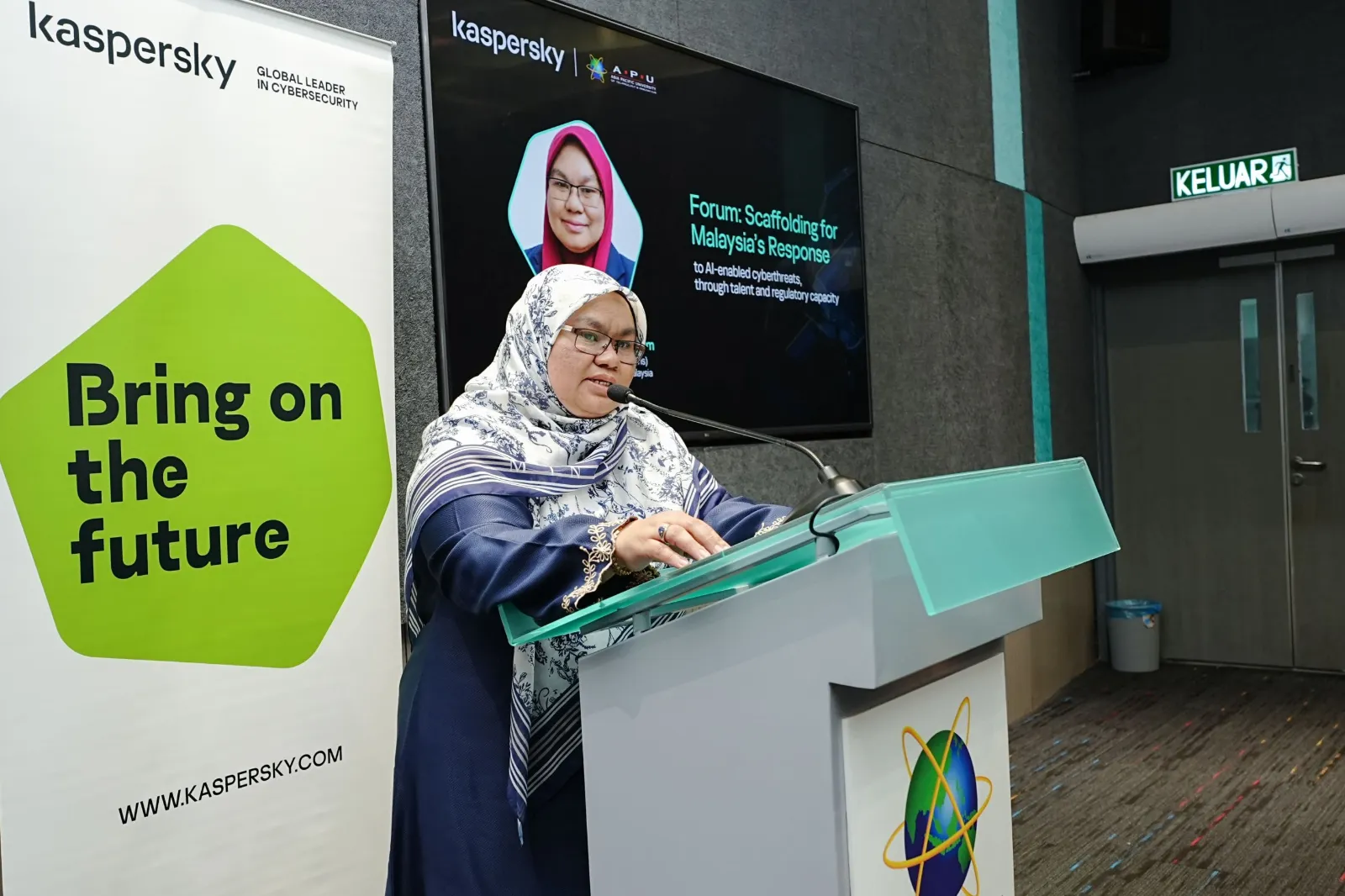
The session was organised by cybersecurity company Kaspersky with Asia Pacific University of Technology & Innovation (APU). Titled “Scaffolding for Malaysia’s Response to AI-Enabled Cyberthreats, through Talent and Regulatory Capacity”, the forum opened with a keynote address. It was delivered by Noursilawati Abdul Halim, Deputy Chief Executive (Operations) of the National Cyber Security Agency (NACSA).
Discussions focused on the cybersecurity talent and policy tools needed to counter AI-enabled attacks. The agenda also tied in with NACSA’s ongoing work to strengthen the country’s cyber resilience.
AI Is Becoming Part of the Attack
Ahmad Fareed Fauzi Mohamad Radzi is a security researcher with Kaspersky’s Global Research and Analysis Team (GReAT). He said AI is making it faster and easier to write malicious software. As a result, attackers need far less technical skill than before.
He also pointed to early examples of malware that use AI to generate new malicious code while running. In those cases, AI is no longer just a tool for building an attack. Instead, it becomes part of the attack itself.
Looking further ahead, emerging capabilities could let AI plan and coordinate entire cyberattack operations with minimal human input. That shift mirrors wider concerns about agentic AI threats in the region.
How Other Governments Are Regulating AI
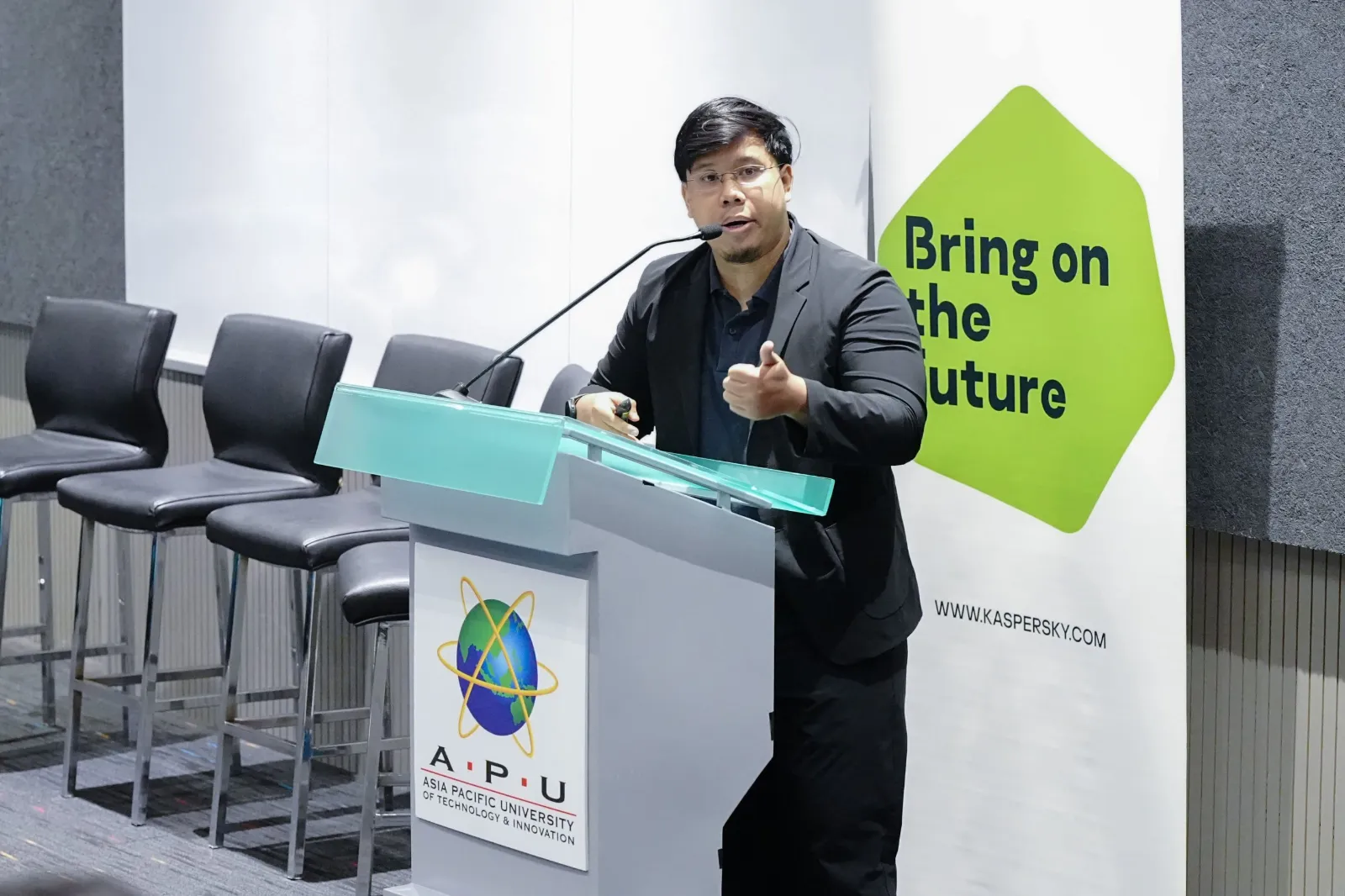
Heng Lee, Kaspersky’s Director of Government Affairs and Public Policy for Asia-Pacific, covered the policy side. He reviewed how Singapore, Australia, India, the United States and the European Union approach AI governance.
Each has taken a different route to managing AI risks while leaving room for innovation. According to Lee, these models offer useful reference points as Malaysia develops its own AI governance agenda.
“Conversations about AI are evolving daily, but there are some pillars that we can always rely on to ensure that a country stays ahead of cyberthreats: a talent pool which has the right skills in an AI-enabled age, and a strong regulatory and institutional framework,” he said.
Building Cybersecurity Talent for the AI Era
A panel discussion then explored how education, industry expertise and regulation can work together. The panellists were Professor Vinesh Thiruchelvam, Chief Innovation, Enterprise & Sustainability Officer at APU; Fazlan Abdullah, General Manager of the Pre-Emptive Technology and Services Division at CyberSecurity Malaysia; Tan Chee Lam, Chief Technology Officer at Revolab Sdn Bhd; and Lee.
Vinesh said the next generation of professionals will enter a very different environment from today’s. With AI changing the nature of attacks, universities have a chance to rethink how they develop cybersecurity talent.
“Beyond technical knowledge, students should gain practical experience in investigating threats, recognising the misuse of AI and making informed decisions when faced with unfamiliar situations,” he said.
He added that linking classroom learning with industry expertise gives graduates the confidence and judgement to handle complex threats.
What Comes Next for Cybersecurity Talent in Malaysia
Lee said bringing government, academia and industry together was meant to identify priorities that will make Malaysia “AI-ready”.
The forum builds on Kaspersky’s existing work with APU, including CyberFest and the International Battle of Hackers (IBOH). The company also partners with Universiti Tun Hussein Onn Malaysia (UTHM) on cybersecurity education and industry knowledge exchange.
For Malaysia, the takeaway was clear. Technology alone will not close the gap. Instead, AI-ready cybersecurity talent and timely regulation will shape how well the country withstands the next wave of threats.