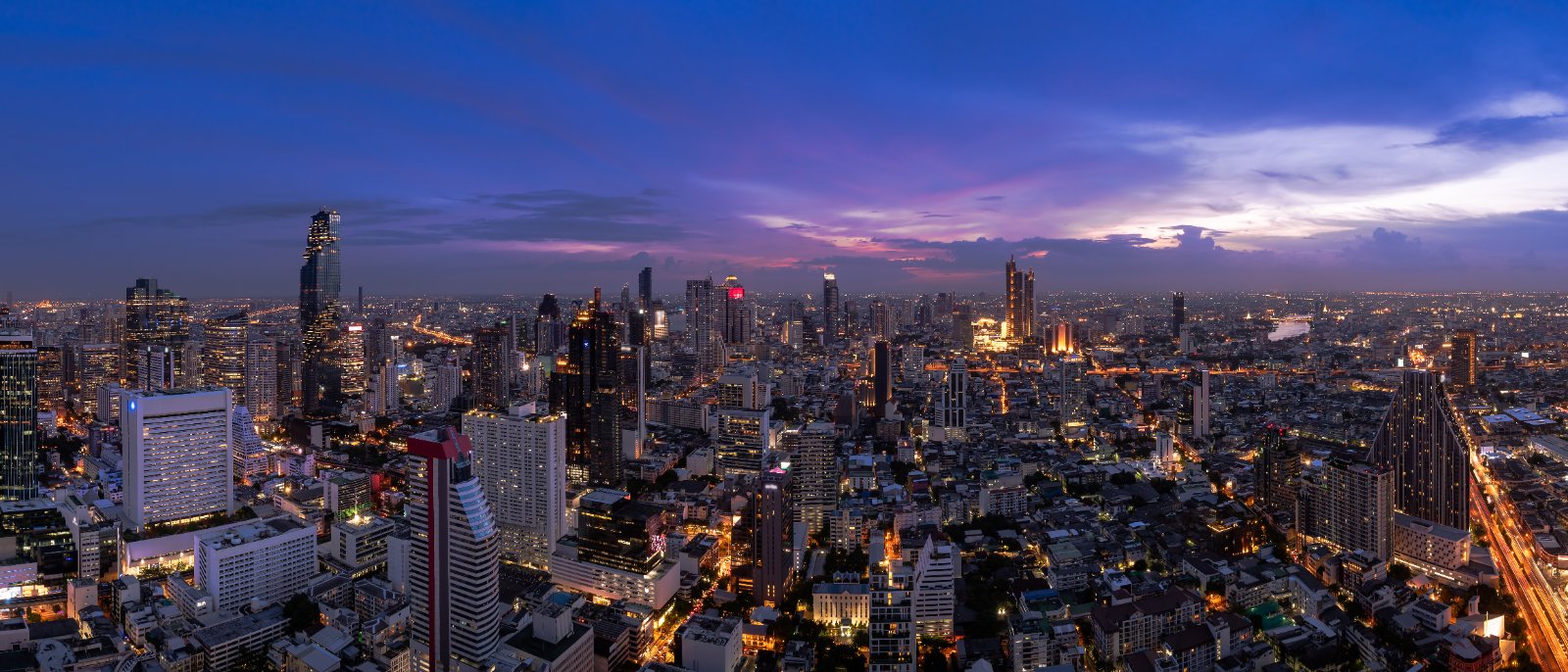

Nearly nine months after the Thailand election 2026, Prime Minister Anutin Charnvirakul leads a coalition government in Bangkok. Meanwhile, a plan to replace the 2017 constitution, approved in a same-day referendum, still awaits its first vote in parliament. A new budget is also in force, and growth forecasts have edged up.
Thailand Election 2026 Results: Seats by Party
Voters chose a new 500-seat House of Representatives on 8 February 2026. The Bhumjaithai Party won the most seats, but no party reached the 251 needed for a majority. The Election Commission certified 499 seats in early March. It then certified the final seat, Suphan Buri constituency 2, on 8 April.
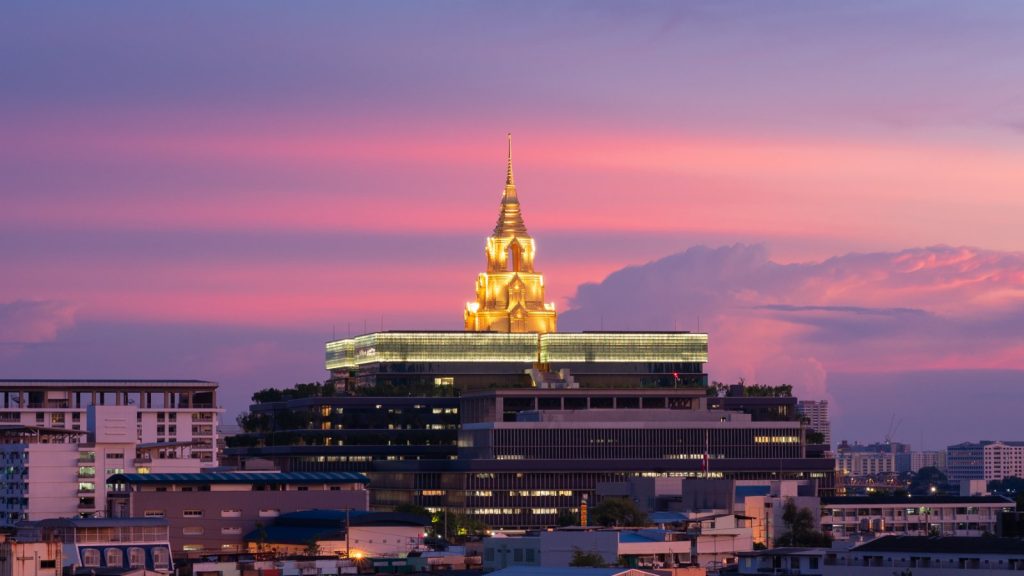
The five largest parties won 465 of the 500 seats between them, with smaller parties sharing the rest:
- Bhumjaithai: 192 seats (173 constituency, 19 party-list)
- People’s Party: 120 seats (88 constituency, 32 party-list)
- Pheu Thai: 74 seats (58 constituency, 16 party-list)
- Kla Tham: 58 seats (56 constituency, 2 party-list)
- Democrat Party: 21 seats (10 constituency, 11 party-list)
How the Coalition Government Took Shape
On 13 February, Anutin announced that Pheu Thai would join a Bhumjaithai-led coalition, Reuters reported. However, talks with Kla Tham broke down over control of the agriculture ministry, according to the Center for Strategic and International Studies. The People’s Party moved into opposition.
On 19 March, the new House elected Anutin as prime minister with 293 votes. People’s Party leader Natthaphong Ruengpanyawut received 119 votes, while 86 MPs abstained, AFP reported. The 35-member cabinet took its oath on 6 April, backed by a 16-party coalition with about 292 seats.
Ekniti Nitithanprapas stayed on as finance minister, and Suphajee Suthumpun kept the commerce portfolio. Natthaphong became Leader of the Opposition on 14 May.
The Referendum on a New Constitution
On the day of the Thailand election 2026, voters also answered one question: whether Thailand should have a new constitution. The proposal passed. According to the Election Commission, 21,621,638 voters approved, or 58.64% of ballots cast. A further 11,241,653 voted against, and 3,074,330 chose no opinion.
Turnout was 69.65% of 52.9 million eligible voters. The current charter came into force in April 2017, after the 2014 military coup. In September 2025, the Constitutional Court ruled that a full rewrite needs three referendums. Therefore, two more national votes must still take place.
Charter Rewrite: Where the Process Stands
Before drafting can begin, parliament must amend Section 256 of the constitution. Bhumjaithai filed its bill on 20 May. It proposes a 100-member Constitution Drafting Assembly of 77 provincial members and 23 experts, chosen by parliament. It would also lower the Senate votes required to about 50 of 200 senators, Xinhua reported.
Rival drafts followed. The People’s Party proposed a 150-member assembly, with voters electing members or a pool of candidates. By contrast, Pheu Thai proposed 152 members and the Democrat Party 100, Thai newspaper Prachachat Turakij reported. Separately, the civil society network ConForAll launched a citizens’ draft with a fully elected assembly.
On 18 June, Constitutional Court judges told lawmakers informally that a 2025 ban on electing drafters covered only the drafting committee, ConstitutionNet reported. Parties then began revising their bills, and parliament postponed a joint sitting planned for 7 and 8 July.
As of 10 October, parliament had not held a first-reading vote, according to TP Channel, parliament’s broadcaster. In September, Bhumjaithai MP Nikorn Jamnong told Thai Rath that the vote should come before the session closes on 22 December. Otherwise, he said, the process would wait until 2027. Pheu Thai MP Chaturon Chaisang made a similar call on 26 October, MGR Online reported.
After approval, Nikorn expects a referendum within 100 days, then about a year of drafting before a final vote.
What the Thailand Election 2026 Means for the Economy
Thai stocks rose more than 3% on 9 February, reaching their highest level in over a year, Reuters reported. Foreign investors bought a net 16.54 billion baht of shares that day, stock exchange data showed. Capital Economics’ Gareth Leather told Reuters the Thailand election 2026 should reduce near-term political risk. Still, he said it did little to change a difficult outlook.
Since then, parliament has passed the fiscal 2027 budget of 3.788 trillion baht. The House approved it by 338 votes to 144 on 10 September. A day later, the Senate passed it by 145 votes to 5. It took effect on 1 October, 0.2% above last year’s level, according to the Government Public Relations Department.
Earlier, the Constitutional Court upheld a separate 400 billion baht emergency loan decree for energy relief and the energy transition. In its April policy statement, the government listed living costs, household debt and small business support among its priorities. It also aims to attract regional offices of foreign firms and more high-value tourists.
Investment, Growth and Trade
Board of Investment applications reached 1.71 trillion baht in the first nine months, up 28% year on year. Foreign applications rose 62% to 1.55 trillion baht, led by the digital sector.
Actual inflows fell, however. First-half foreign direct investment dropped 4.7% to 233.21 billion baht, based on provisional central bank data cited by Thai Examiner.
On 28 October, the Bank of Thailand held its policy rate at 1.00%. It also raised its 2026 growth forecast to 2.4%. Still, it said gains from technology and AI exports remain concentrated, while lending to small businesses continues to contract.
In August, the National Economic and Social Development Council, the state planning agency, put second-quarter growth at 1.9%. It also lifted its full-year forecast to 2.2%. Meanwhile, Thai exporters have faced a 12.5% US tariff under Section 301 of the US Trade Act since 24 July.
What Comes Next After the Thailand Election 2026
First, the opposition plans a no-confidence debate against Anutin and 17 ministers, provisionally from 7 to 10 December. A vote would follow on 11 December. After that, the parliamentary session closes on 22 December. The Bank of Thailand then makes its next rate decision on 23 December.
For a regional comparison, see RiseAsia’s report on the Asian Development Bank’s 2026 forecast for developing Asia. Official Thailand election 2026 results are available from the Election Commission, which also runs national referendums.
To learn more, visit the Election Commission of Thailand official website.