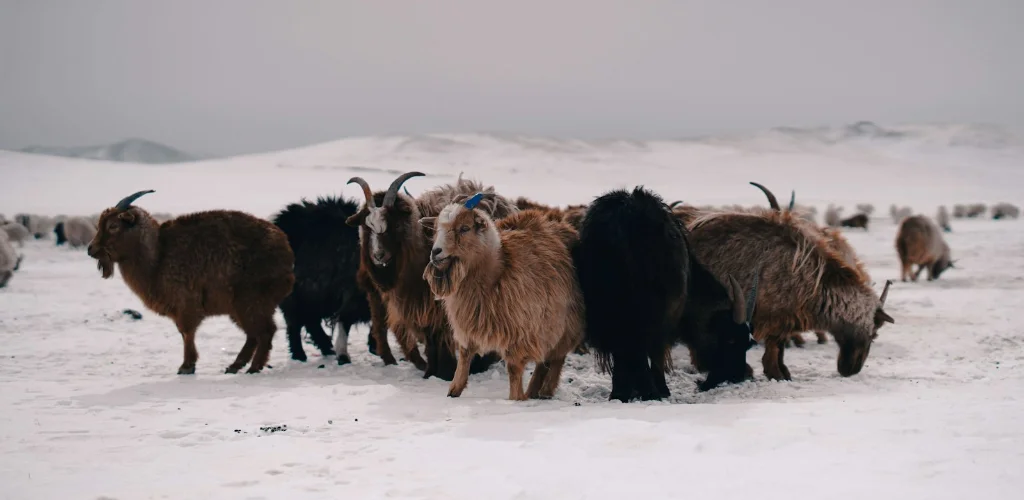

Mongolia is one of the world’s great sources of fine goat fibre. This guide explains how Mongolian cashmere moves from herders on the steppe to factories and export markets. It also looks at why the country is working to process more of it at home, a shift that matters for trade, jobs and textile buyers across Asia.
Mongolian Cashmere Starts With Herders and Goats
Cashmere is the soft, fine undercoat that goats grow to survive harsh winters. Mongolia’s cold, dry climate produces long, fine fibres that the textile trade prizes for warmth and lightness. In spring, as the weather warms, herders comb the loose undercoat from each goat by hand.
Livestock herding remains central to rural life. Mongolia counted 58.1 million head of livestock at the end of 2025, according to preliminary census results from the National Statistics Office. Goats made up close to 40 per cent of that total, or roughly 23 million animals. Many herding families rely on spring cashmere sales as a key source of yearly cash income.
Mongolian Cashmere in the Global Supply
Mongolia is the world’s second-largest producer of raw cashmere after China. Germany Trade & Invest estimates that the country supplies about 40 per cent of global cashmere output. Its herds yield around 10,000 tonnes of raw goat cashmere a year, alongside large volumes of sheep wool, camel hair and yak fibre.
Much of this fibre has historically left the country after only basic cleaning. Buyers in China and Italy, in particular, have long bought Mongolian fibre for further processing into yarn and garments.
How Mongolian Cashmere Is Processed
Turning raw fibre into a finished product takes several steps. Each step adds value, which is why the country wants more of them to happen at home.
1. Washing
Raw cashmere is scoured to remove dirt, grease and dust. Washed fibre is the most common form in which Mongolia has exported cashmere.
2. Dehairing
Machines separate the fine down from the coarse outer guard hair. The result, dehaired or combed cashmere, sells for a higher price per kilogram.
3. Spinning, knitting and weaving
Dehaired fibre is dyed and spun into yarn, then knitted or woven into sweaters, scarves and fabric. These finished goods capture the largest share of the final value.
The Push for Value-Added Mongolian Cashmere
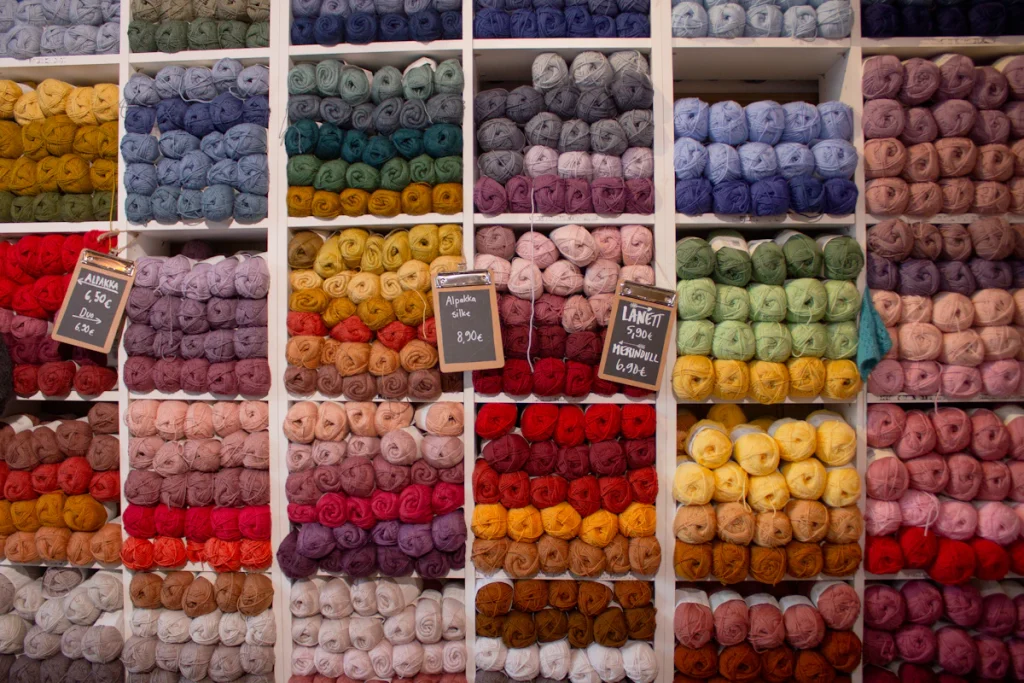
In 2024, the government introduced the “White Gold” national programme to strengthen light industry. Officials said at its launch that about 70 per cent of exported cashmere left the country only washed. Just a quarter of exports were finished products made domestically, according to a summary of the programme published by the Mongolian Embassy in Ankara.
The programme aims to change that balance. Its goals include:
- Processing more wool and cashmere inside the country
- Upgrading factory equipment through long-term, lower-interest bank loans
- Raising herder incomes and expanding exports of finished goods
- Doubling agricultural exports from USD 400 million to USD 800 million
Germany Trade & Invest reports a target to lift the processed share of cashmere from about 20 per cent in 2024 to 40 per cent by 2028.
Sustainability and Traceability
Buyers increasingly want to know where fibre comes from and how it was produced. The Sustainable Fibre Alliance, an international non-profit, runs a cashmere standard that covers grassland health, animal welfare and herder livelihoods. In its 2025 operational summary for Mongolia, the alliance reported about 1,100 tonnes of certified raw cashmere, produced by more than 19,000 herder households.
Cleaner processing is also on the agenda. A Global Environment Facility project, supported by the United Nations Development Programme and running from 2025 to 2030, helps cut hazardous chemical use in cashmere, wool and leather supply chains. UNDP reported in June 2026 that traceability and raw material preparation were among the topics discussed with officials from all 21 provinces. The issue ties into wider work against land degradation, such as Mongolia’s Billion Trees Movement.
What Mongolian Cashmere Means for the Economy
Cashmere is one of Mongolia’s most valuable agricultural exports. The Mongolian government has described it as a key driver of the farm sector’s recent growth.
For a mining-heavy economy, cashmere offers a renewable source of export income that reaches rural communities directly. More domestic processing could also create factory jobs in towns and cities.
As of November 2026, the direction is clear. Mongolia aims to sell more finished, traceable cashmere rather than raw fibre. If that shift continues, more of the value from each spring combing will stay with the herders and workers who produce it.