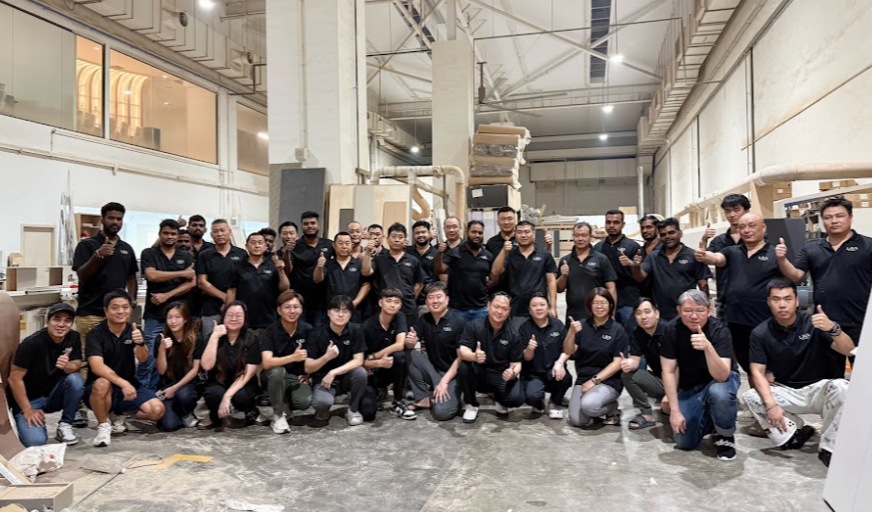

Singapore carpentry is steadily moving across the Causeway. Tan Shao Wen, founder of LAVA by ES Works, estimates that around 80% of the country’s carpentry firms now fabricate in Malaysia. Moving his own factory could cut his costs by at least S$100,000 a month. Instead, he has invested about S$2.3 million to keep production in Singapore.
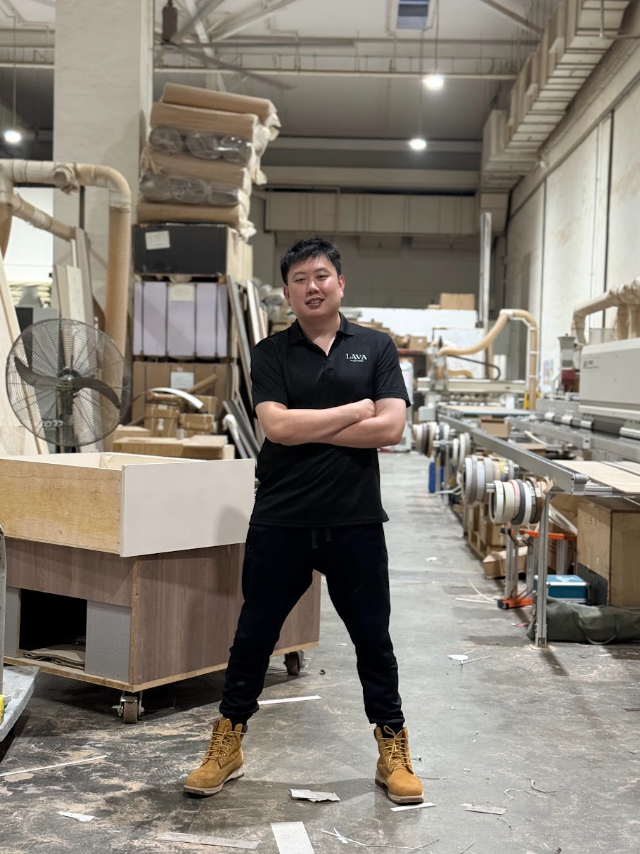
More than S$1 million of that sum went into machinery that cuts fabrication time from three weeks to as little as two or three days. His decision runs against the economics pulling production offshore. It also raises a wider question: can Singapore’s manufacturers stay competitive as more businesses cross the Causeway?
Why Singapore Carpentry Firms Are Moving to Johor
The pressure is not unique to carpentry. Gardenia shut its Pandan Loop bakery in June 2026 and moved production to Johor Bahru, affecting 141 workers. Yeo’s has also shifted its can manufacturing to Malaysia. Meanwhile, Singapore’s industrial rental index rose for a 23rd consecutive quarter in 2Q2026, leaving rents 27.2% above their pandemic-era low in 3Q2020.
Across the border, the Johor-Singapore Special Economic Zone offers eligible companies a 5% corporate income tax rate for up to 15 years.
For Shao, the gap is easy to see. LAVA, a Singapore carpentry business with 76 staff, runs from an 18,000 sq ft factory in Defu Industrial City. Rent there is about S$40,000 a month, compared with an estimated S$10,000 for a larger space in Malaysia. Across all operating costs, he estimates that a move would save at least S$100,000 every month.
How Cross-Border Carpentry Works
Firms that manufacture in Malaysia typically build cabinets and wardrobes there, dismantle them into flat panels and truck them into Singapore for installation. Because the panels arrive as unfinished components rather than finished furniture, they may attract lower import duties, depending on their classification and customs requirements. Industry estimates suggest a full lorry load can cost only a few hundred dollars to transport.
Local contractors still take measurements, coordinate projects and handle installation, so customers may still pay them a premium. Most homeowners never ask where their wardrobes or kitchen cabinets were made. However, when panels are measured in Singapore but fabricated overseas, errors may only surface on installation day. Speciality boards sourced from abroad can also take two to four months to arrive, delaying renovations. Some homeowners have even approached LAVA to redo overseas-made cabinets that arrived in the wrong sizes.
Investing S$2.3 Million to Keep Singapore Carpentry Local
Rather than chase cheaper rent, Shao invested in speed and precision. His machines cut, drill and edge panels to exact measurements, so jobs that once took three weeks now take two to three days. As a result, he says the same floor space can handle five to ten times the workload.
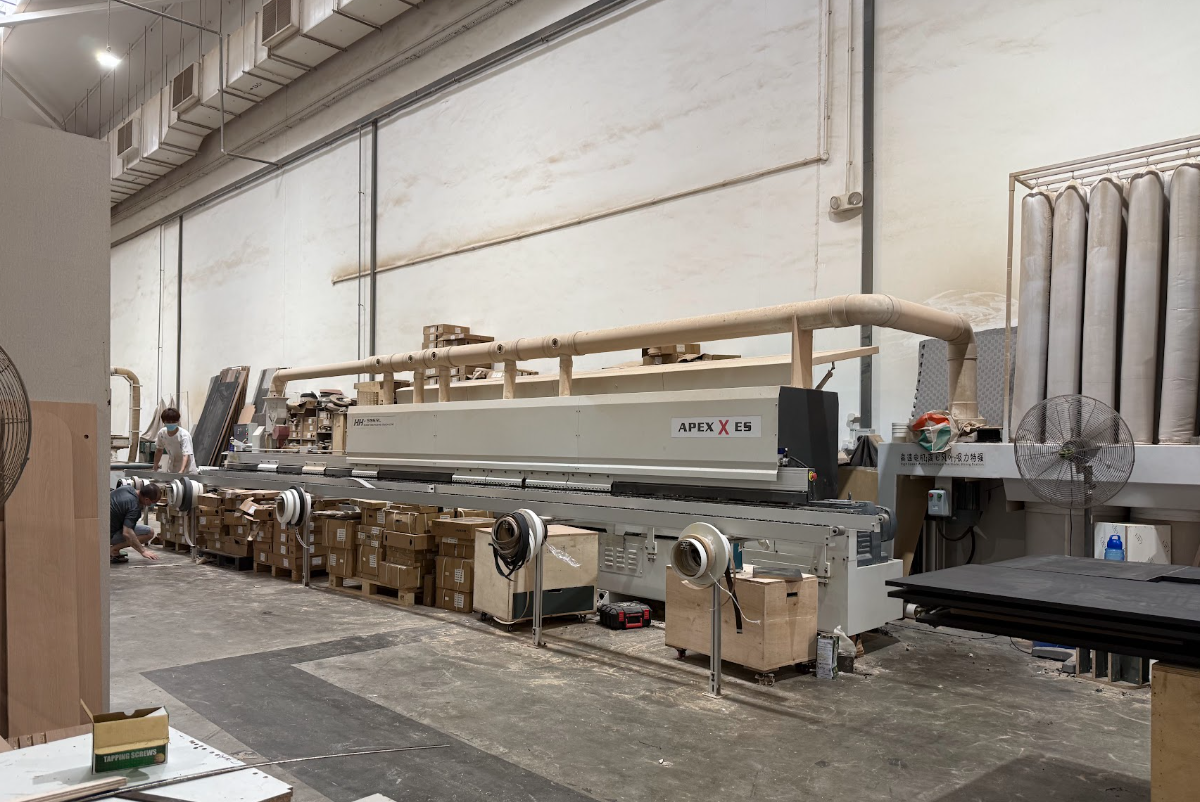
Keeping boards in local stock also helps. According to Shao, his factory can now fabricate the carpentry for an HDB flat in about two weeks.
From the Ring to the Factory Floor
Shao’s route into manufacturing was unconventional. As a teenager, he fought professionally in Singapore and overseas. In his early twenties, he worked shifts in the oil and gas industry and used his days off to learn the renovation trade. Now 34 and a father of five, he has spent about 13 years in the industry and committed substantial capital to making local production faster and more efficient.
Can Singapore Carpentry Stay Competitive?
Shao does not believe customers should pay a premium simply because something is made in Singapore. Instead, he argues that local manufacturers must prove their value through better workmanship, greater efficiency and faster turnaround.
His approach reflects the wider challenge facing Singapore carpentry and the country’s remaining factories. As more production moves north, they must find ways to absorb higher operating costs without passing the full burden on to consumers. The outcome will shape not only renovation prices, but also the skills, factory capacity and jobs that stay in Singapore. For more on how local firms are adapting, see how Singapore SMEs are turning to circular economy solutions.